
Introduction
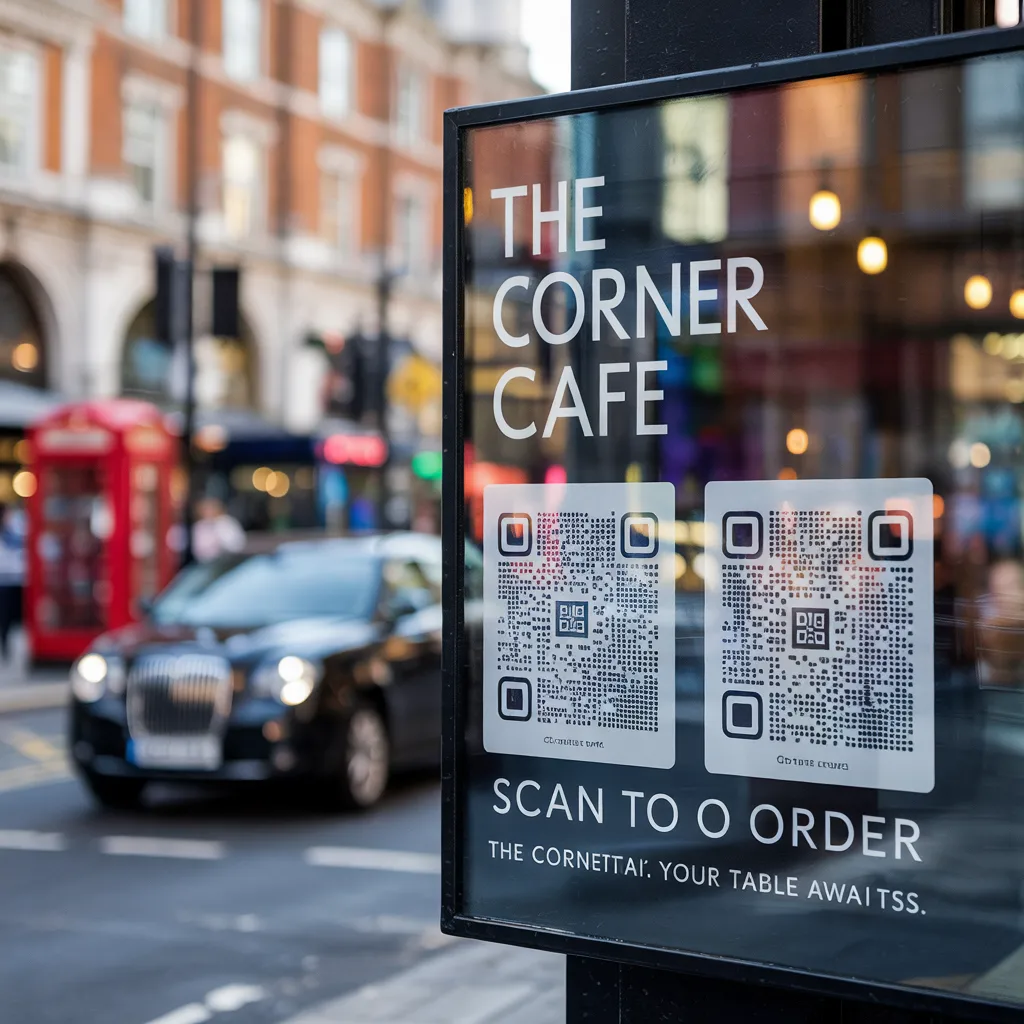
Adding a QR code on signage is one of the most practical steps a UK business can take to connect its physical presence with its digital content. Some business owners wonder whether QR codes have had their moment. Still, customer familiarity with scanning has only grown, and the technology is now a mainstream part of how people interact with businesses on the high street and beyond. Magenta Signs works with businesses across the UK to integrate QR codes into signage designed to perform, and this guide covers everything you need to know to do it well.
What Is a QR Code and Why Does It Belong on Your Signage?
A QR code is a scannable square graphic that directs a smartphone camera to a specific web destination, form or digital resource. For businesses, the value lies in bridging the gap between a physical sign and an online action. A customer standing outside your premises, reading a poster in your reception or passing your branded vehicle can scan the code and immediately access your menu, booking page, product range or promotional offer without typing a single character.
Where traditional printed signs can only communicate what fits on the surface, a scannable code extends that communication through the linked destination. It removes friction from the customer journey and gives your signage a measurable, responsive dimension that static print alone cannot offer.
Where QR Codes Work Best on Business Signage
Getting the placement right is as important as the code itself. A code that is difficult to reach, poorly lit or too small to scan reliably will simply be ignored. The following locations consistently deliver strong results for UK businesses.
Shop Front and Window Signage
A QR code built into a shop window sign is particularly effective outside trading hours. When your premises are closed, a well-designed window graphic with a scannable code can still direct passing customers to your website, online shop or booking system. Consider pairing the code with a brief prompt such as “Closed today? Browse our full range here” to make the purpose immediately clear and encourage after-hours engagement. This is one of the most straightforward applications available to any high street business and requires no ongoing effort once the sign is in place.
Posters and Promotional Displays
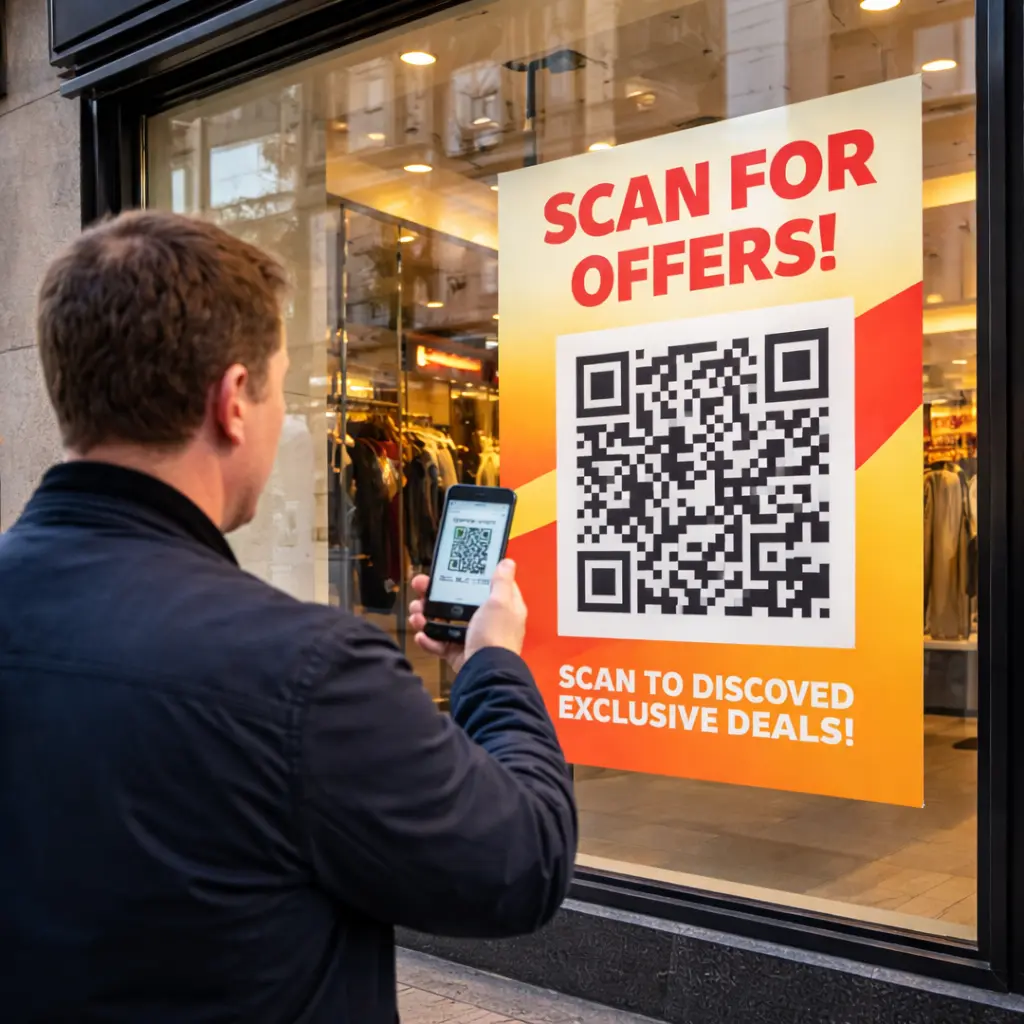
A poster promoting a new service or seasonal offer becomes considerably more useful when a customer can scan directly through to the relevant page rather than searching online manually. Inside retail environments, waiting areas, hospitality venues and office receptions, a well-placed scannable poster keeps your printed material connected to your latest content. It also makes campaigns easier to measure, since scan data gives you a direct indication of how many people engaged with a particular display.
Vehicle Livery and Fleet Graphics
Commercial vehicles travelling through towns, retail parks and industrial estates carry valuable advertising exposure throughout the working day. Incorporating a scannable code into vehicle livery allows interested viewers to access your contact details or website instantly from a car park, loading bay or traffic queue. For a van-based trade business, linking the code to a quote request form or a gallery of completed work can turn a passing glance into a genuine enquiry. The code should always appear on a stationary panel, such as the side or rear of the vehicle, where a pedestrian has time and space to scan without difficulty.
Exhibition and Event Signage
At busy trade events and exhibitions, visitors rarely carry printed materials home. A scannable code on a pull-up banner, exhibition panel or event display gives attendees an immediate way to capture your details, download a product sheet or register their interest with a single scan. This keeps the interaction clean and removes the cost of producing large quantities of printed brochures. For businesses attending multiple events throughout the year, a single well-designed display with a dynamic QR code can serve every occasion without being reprinted.
Point of Sale and In-Store Displays
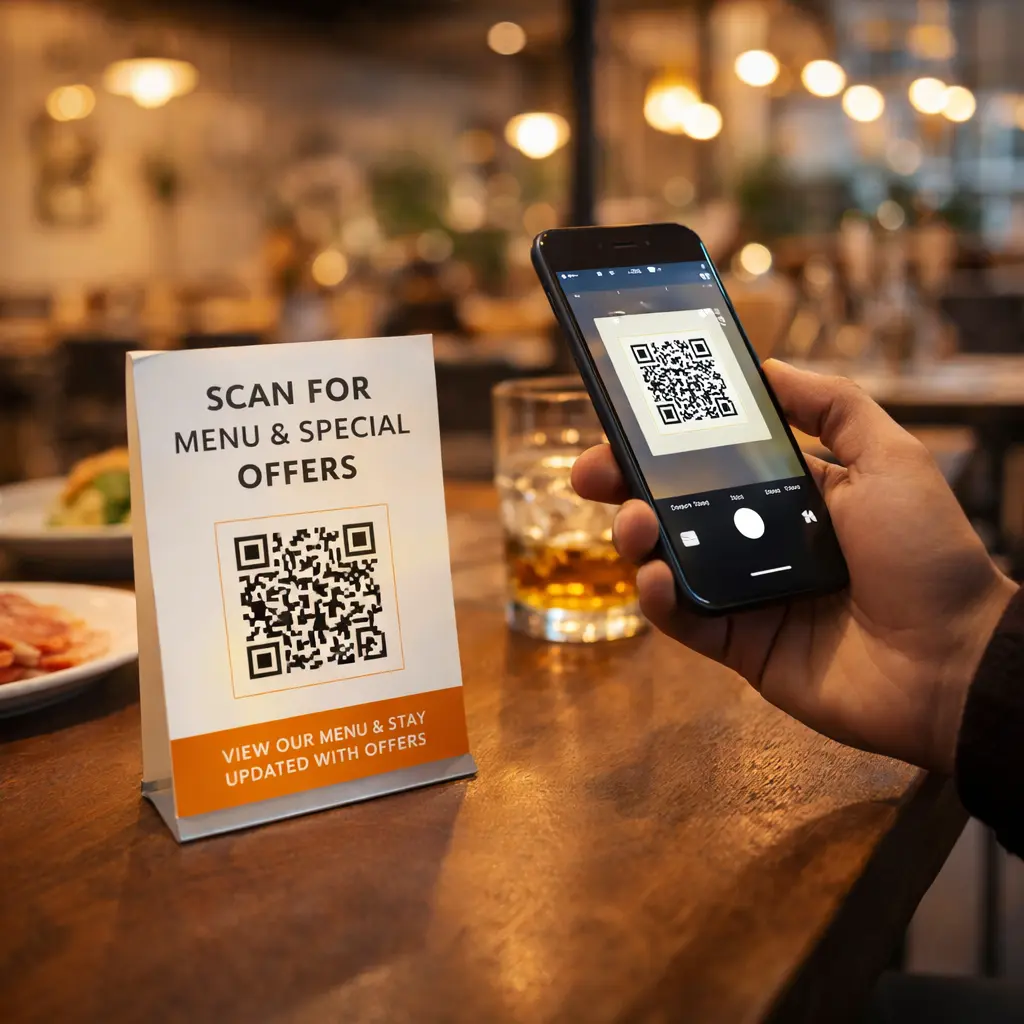
Scannable codes placed near products or at the till point can direct customers to reviews, detailed product information, loyalty scheme sign-ups or time-limited offers. Customers are now comfortable and familiar with this format across UK retail and hospitality settings. A clearly labelled code next to a product display or service menu can meaningfully extend the conversation beyond what the sign itself has room to say
Mobile Optimisation: The Step Most Businesses Miss
A QR code is only as useful as the page it links to. When a customer scans your sign, they land on your website using a mobile device, often with limited time and patience. If that page loads slowly, displays poorly on a small screen or buries the relevant information beneath layers of navigation, the scan becomes a dead end. Before any signage incorporating a scannable code goes into production, the destination page should be tested on a smartphone to confirm it loads quickly, presents clearly and makes the intended action, whether that is booking, buying or contacting, easy to complete.
Design Considerations for QR Code Signage
How you incorporate a QR code into a sign matters as much as where you place it. A code that is too small, poorly contrasted or surrounded by cluttered design will fail to scan reliably regardless of how strong the destination page is.
Size is the most common error. A code intended to be scanned from a metre away needs to be considerably larger than one on a business card. Testing in the intended environment before final production is always worthwhile, particularly for window graphics and external displays where viewing distances vary.
Contrast is equally important. The code must stand out clearly from its background. A dark code on a light surface or a light code on a dark background works well. Placing a code over a busy photographic image or a gradient is likely to cause scanning failures and should be avoided.
A short prompt placed immediately beside the code makes a meaningful difference to engagement. Phrases such as “Scan to book your visit” or “Scan for today’s offers” tell the viewer exactly what to expect and give them a reason to act. Magenta Signs designs QR code integration as part of the overall sign layout, ensuring the code is correctly sized, clearly positioned and sits comfortably within the wider design rather than appearing as an afterthought. For that design to last, the right signage material matters, as different materials perform differently across outdoor, indoor and high-traffic environments.
Getting More From QR Codes on Your Signage
QR codes have become a natural bridge between physical displays and digital content, giving customers an instant connection to more information without cluttering your sign with text.
The most straightforward application is a static QR code, which links permanently to a single destination such as a menu, booking page, product listing or contact form. These are simple to generate, free to create and require no ongoing management. For content that rarely changes, a static code is often all you need.
For businesses whose promotions and messaging shift throughout the year, a dynamic QR code offers greater flexibility. Rather than linking directly to a URL, it routes through a redirect you control via an online dashboard. This means the destination can be updated at any time without reprinting the sign. The same window graphic can point to a Christmas promotion in December, a spring sale in March and a new service launch later in the year. For quality signage designed to last several years, this can meaningfully reduce long-term print costs.
Beyond the destination itself, it is worth thinking about where the code leads. A well-designed landing page tailored to the sign’s context will convert far better than a generic homepage. Keep the destination mobile-friendly, fast-loading and focused, as customers scanning in passing have little patience for slow pages or cluttered layouts.
Conclusion
A well-placed, well-designed QR code on signage gives your business a direct and measurable connection between your physical presence and your digital content. Whether you are planning window graphics, in-store displays, vehicle livery or exhibition panels, making your signage scannable is a straightforward way to extend its value. If you are ready to explore what QR code integration could do for your business, contact Magenta Signs today, and the team will help you design a solution that looks professional, scans reliably and continues working long after installation.