

Introduction
Opening a new business involves a great deal of planning, and signage is one of the areas that catches new owners out most frequently. The assumption is that it can be sorted quickly near the opening date. In practice, signage for a new business involves multiple stages, each with its own lead time, and leaving any of them too late creates unnecessary pressure at an already demanding time. This checklist takes you through every stage in the right order, so nothing is overlooked before your first customer walks through the door.
Why Signage Planning Needs to Start Early
Permanent signage takes longer than most people expect. Design, approval, production and installation all have lead times that need to sit within your opening schedule. Add planning permission into the mix, and the timeline extends further still.
Starting early gives you space to make considered decisions rather than rushed ones. Your signage sets the visual standard for your brand at the point where customers encounter it for the first time, and correcting it after opening is considerably more disruptive than getting it right from the outset.
Step One: Map Your Full Signage Requirements
Before briefing any supplier, establish everything your new business will need across all signage types. A retail shop on a high street has different requirements from a unit on an industrial estate or a professional services firm in an office building.
Work through the following at this stage:
- Exterior signage, including fascia signs, window graphics and any freestanding or directional boards
- Interior signage, including reception branding, wayfinding and departmental graphics
- Safety and compliance signs required before you can open to the public
- Temporary and promotional signage needed specifically for the launch period
A clear scope before approaching a supplier makes the entire process faster, more accurate and more cost-effective.

Step Two: Address Planning Permission Before Anything Else
Certain types of external signage in the UK require advertisement consent from your local planning authority before installation. Illuminated shop front signs, large format exterior displays and signage on listed buildings or within conservation areas are the most common examples.
The consent process has its own timeline and cannot be rushed. Commissioning permanent signage without first confirming consent risks delays, enforcement action or a costly removal and reinstallation. Magenta Signs Ltd can advise on what applies to your premises and support you through the process from the outset.
Step Three: Commission Your Permanent Signage First
Permanent signage carries the longest production and installation lead time on this checklist and should be the first thing you commission. Your fascia sign, illuminated lettering, dimensional building signs and exterior panel displays all need to be designed, approved, manufactured and installed before opening day.
The materials you choose will directly affect durability, maintenance needs, and how well your signage performs in the British climate. Selecting high-quality materials early helps avoid future repairs and ensures long-term reliability.
This stage also requires your brand identity to be fully resolved. Your permanent shop front signage sets the visual benchmark that all other signs and printed materials will follow, and decisions made here have consequences that run for years.
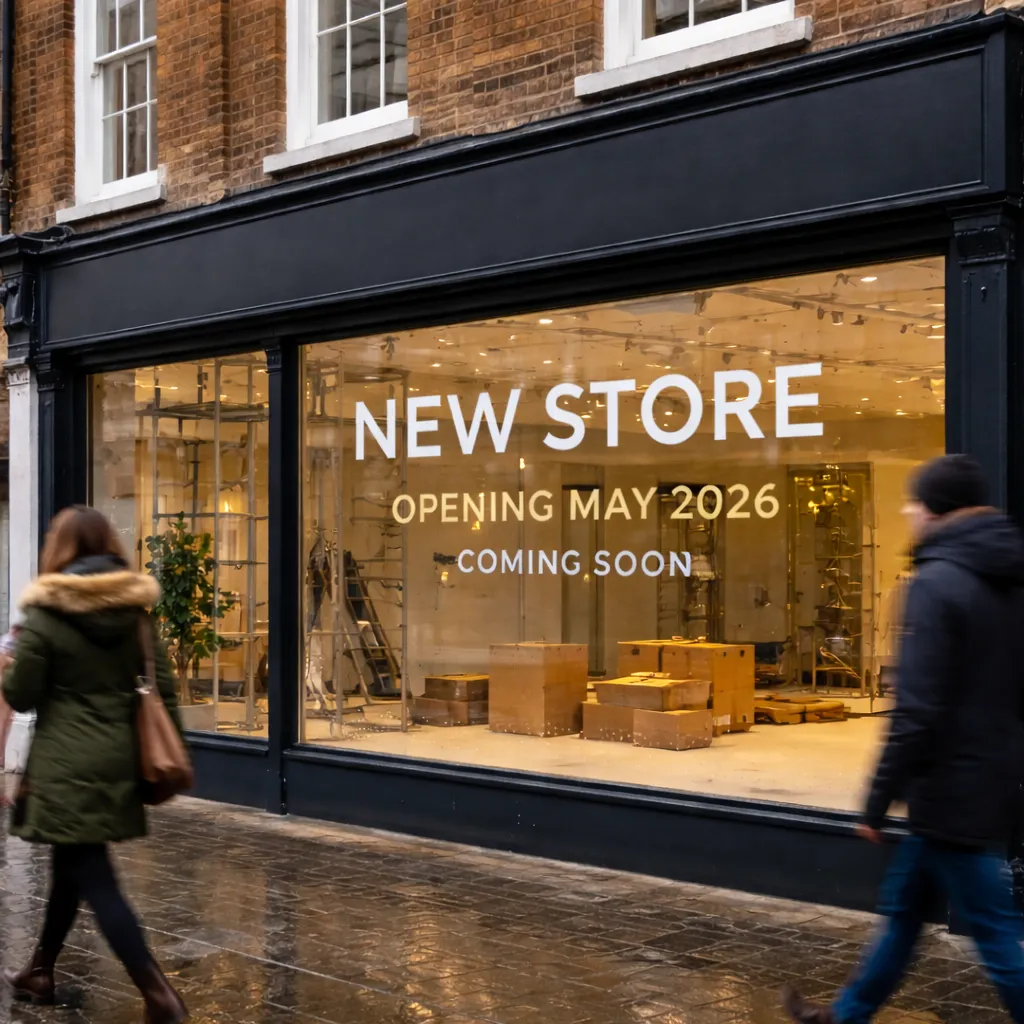
Step Four: Install Coming Soon Window Graphics
Once your premises are secured and fit-out work is underway, a coming soon window graphic transforms a blank shopfront into an active marketing asset. Vinyl applied to your glazing can carry your business name, brand colours, an expected opening date and your social media details, giving your business a professional presence during what would otherwise be a quiet period.
This type of business launch signage builds local awareness before you open and generates early interest from passing footfall. Coming soon, graphics are straightforward to produce and can be turned around quickly once your brand assets are confirmed. If you are at this stage, Magenta Signs Ltd can move promptly to get something in the window.
Step Five: Prepare Your Launch and Promotional Signage
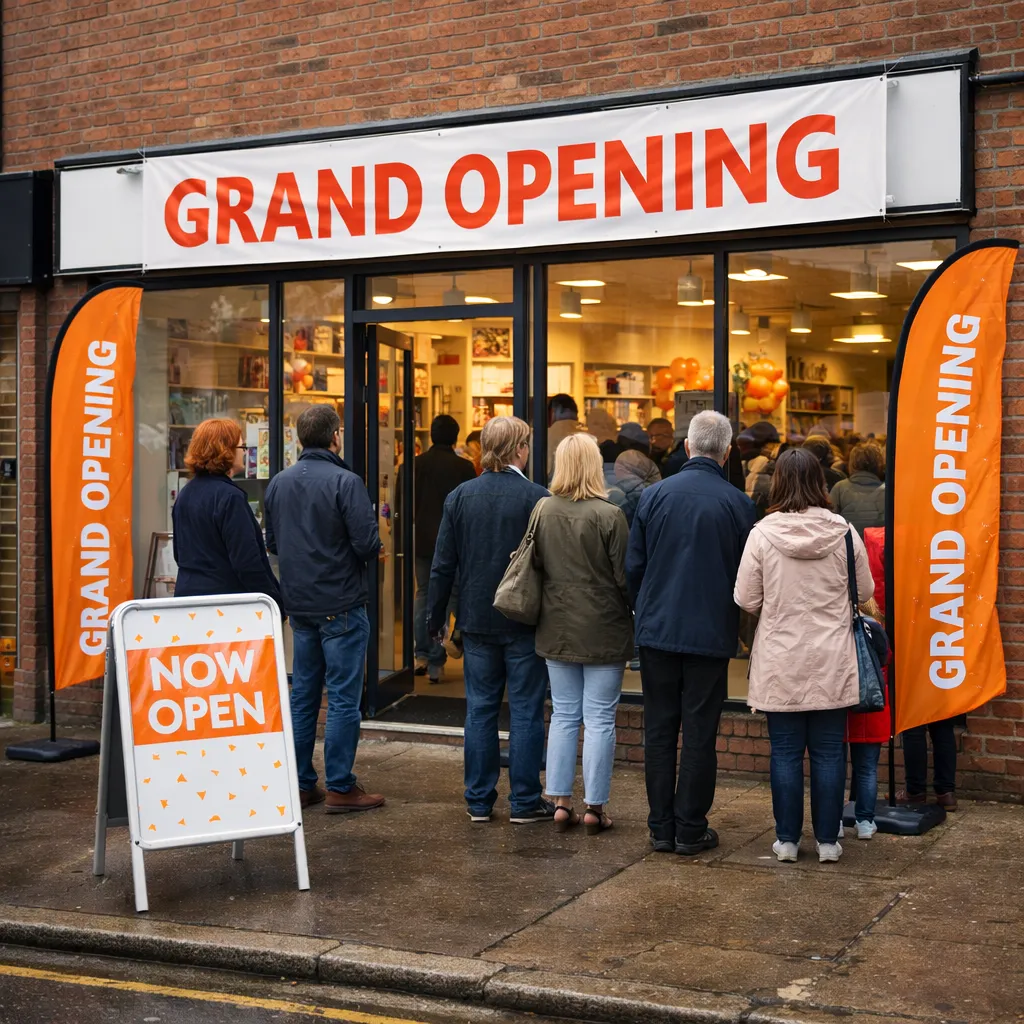
As opening day approaches, temporary signage supports the launch and draws passing trade in on the day. Formats worth considering include:
- Vinyl banners with a grand opening message displayed on your fascia or in your window
- A-frame pavement signs positioned on the footpath to capture pedestrian attention at eye level
- Feather flags and outdoor flag signage provide visibility from a distance on retail parks and roadside locations
- Promotional window graphics highlighting opening offers, launch events or introductory pricing
These formats are temporary and cost-effective but need to look consistent with your brand and professionally produced on the day that matters most.
Step Six: Install Interior Branding Signage
Interior signage is often treated as an afterthought and rushed in the final days before opening. Wayfinding signs, reception branding and directional graphics all deserve proper attention and adequate lead time to be produced and installed correctly. Your interior signage is the first thing customers see once they step through the door, and it should reflect the same visual standard as your shop front.
Dimensional lettering on a feature wall, a well-designed reception board or clear departmental wayfinding all contribute to a professional environment that builds confidence in your business from the moment a customer enters.
Your Complete New Business Signage Checklist
| StageActionTiming1Map full signage requirements across all typesAs early as possible2Confirm planning permission requirementsSix to eight weeks before opening3Commission permanent shop front signageSix to eight weeks before opening4Install coming soon window graphicsAs soon as premises is secured5Order launch and promotional signageTwo to four weeks before opening6Install interior and compliance signageOne to two weeks before opening |
Conclusion
A structured signage checklist removes the guesswork and ensures your new business opens with everything in place. Each stage connects to the next, and starting early gives you the time to make confident decisions rather than reactive ones. Whether you are opening a high street shop, a retail unit or a professional premises, get in touch with Magenta Signs Ltd early in the process, and we will help you open with signage that represents your business properly from day one.