

Introduction
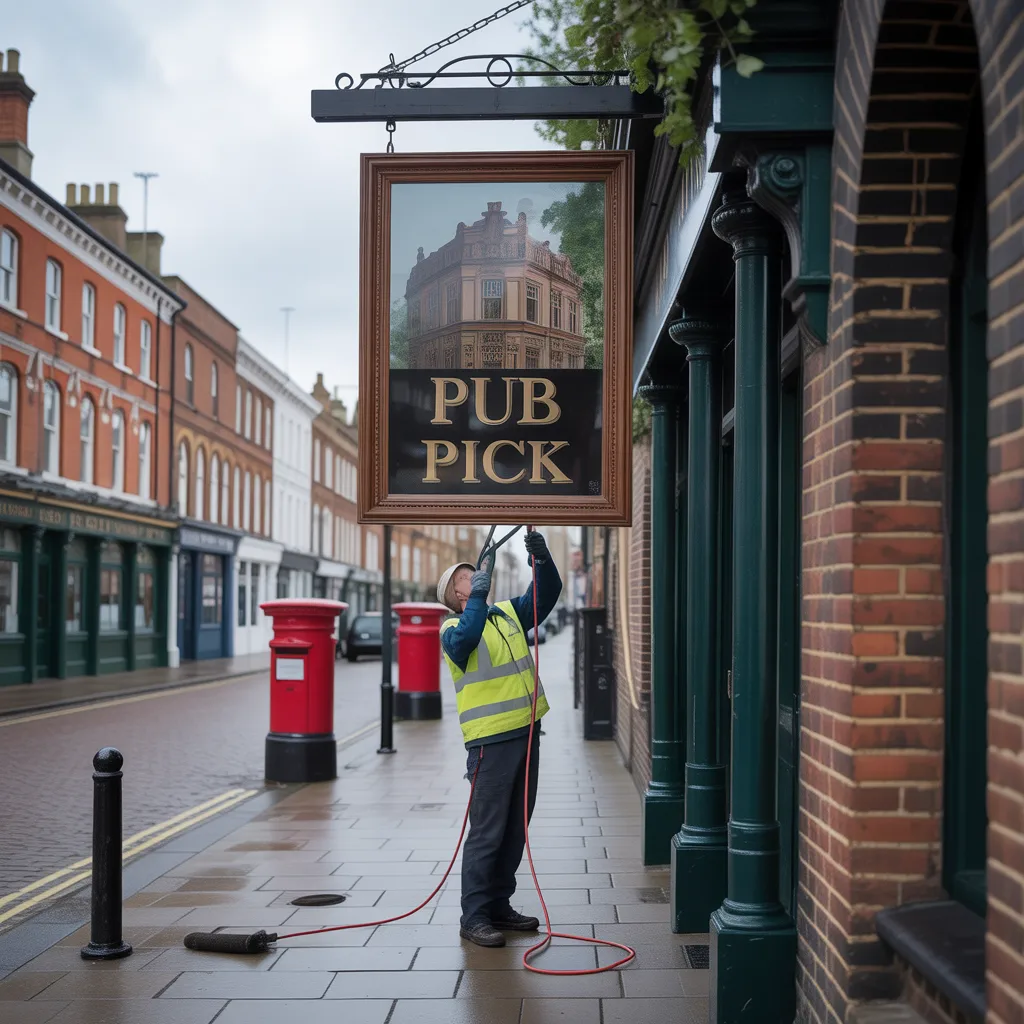
Outdoor signage takes a great deal of punishment across a typical UK year. Rain, wind, UV exposure, damp and seasonal temperature shifts all take their toll on exterior signs, and the effects build up gradually until the damage becomes difficult to ignore. A grimy fascia, lifting vinyl or a section of illuminated lettering that has gone dark all communicate the wrong thing to customers before they have even entered your premises. The encouraging reality is that maintaining outdoor business signs well does not demand significant time or resources. A practical cleaning routine and basic seasonal checks make a substantial difference to how long your signage lasts and how well it represents your business throughout the year.
Why Outdoor Signage Maintenance Pays for Itself
Neglected exterior signage deteriorates faster than most business owners expect. What begins as a dull surface or slightly lifting vinyl edge progresses into faded graphics, corroded fixings and sign faces that no longer present the business as it deserves.
The cost of consistent upkeep is always lower than the cost of early replacement. Beyond the financial case, clean and well-maintained outdoor signage signals to every passing customer that your business is active, professional and worth engaging with. That impression forms on the street, before any conversation takes place.
Choosing durable materials designed for outdoor use, combined with consistent upkeep, helps protect your investment, maintain visual quality, and reduce the long-term impact of weather-related wear.
General Cleaning Guidelines for Outdoor Business Signs
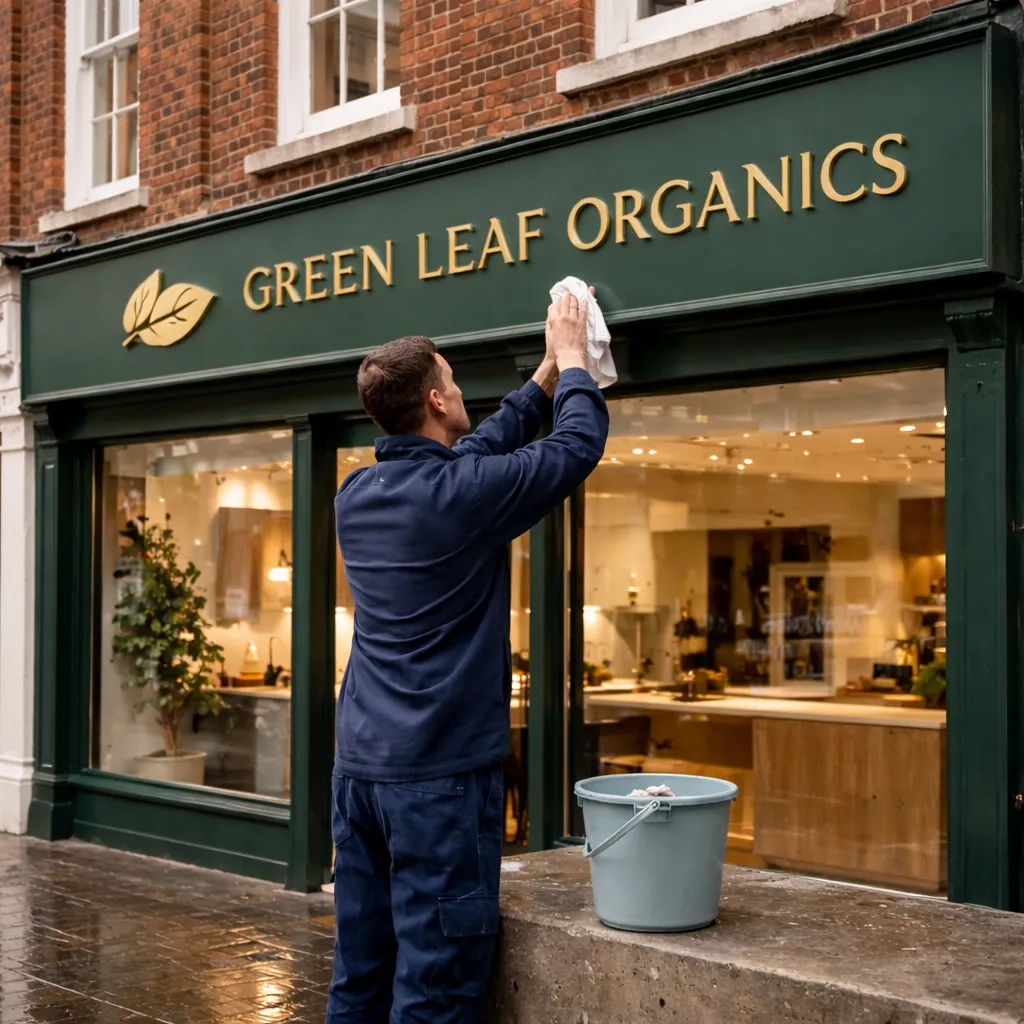
For the majority of exterior business signs, warm water and a mild detergent applied with a soft cloth or sponge removes surface dirt and grime effectively without causing damage. Avoid abrasive cloths, scouring pads and solvent-based cleaners, all of which scratch sign faces, strip protective coatings and accelerate fading.
A soft-bristle brush is useful for textured surfaces and dimensional lettering where dirt settles into recesses and resists wiping. Always rinse thoroughly with clean water after washing to remove detergent residue. Work from the top of the sign downwards to prevent dirty water from spreading across sections already cleaned.
When Pressure Washing Is and Is Not Appropriate
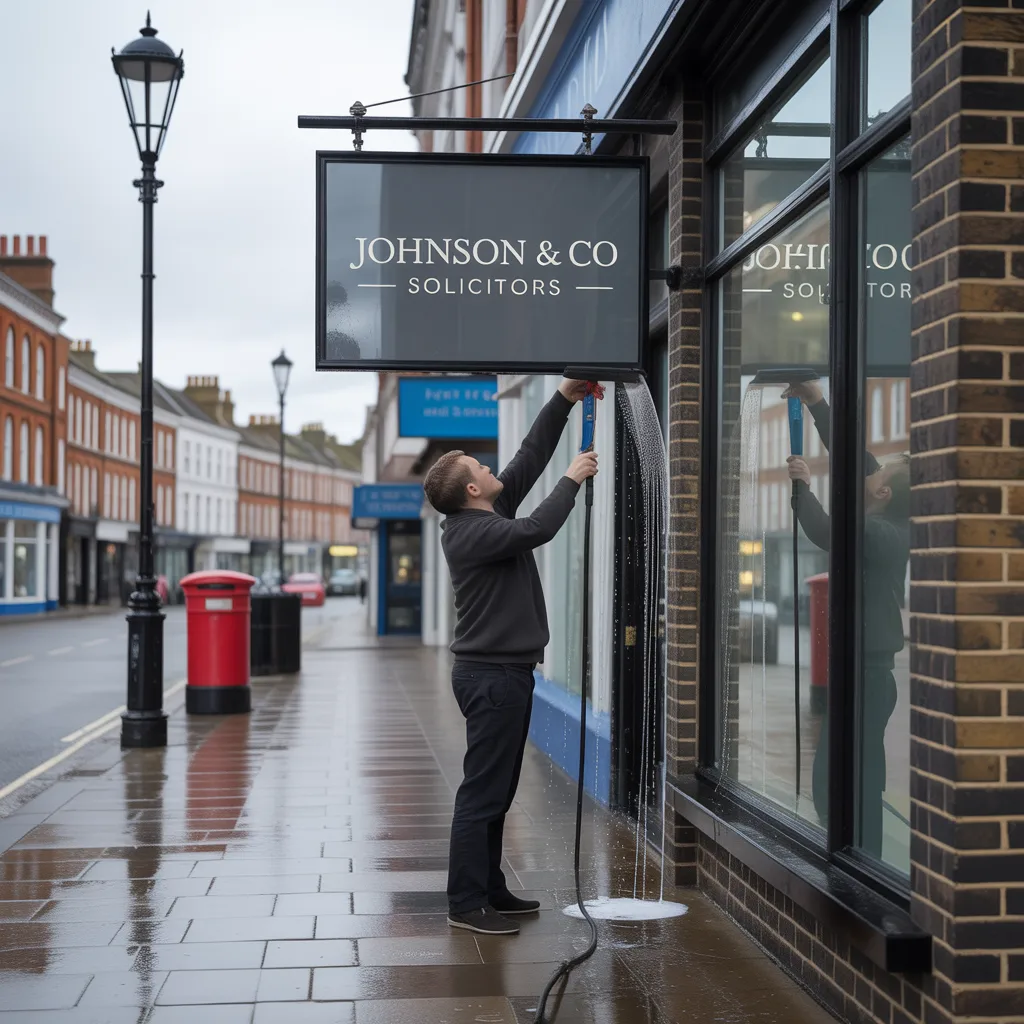
Pressure washing works well on robust exterior panels such as aluminium composite boards and powder-coated metal frames. Keep the pressure at a low to moderate setting and maintain a safe working distance from the sign face to avoid lifting vinyl, cracking acrylic or driving water behind panels and into fixings.
It is not appropriate for illuminated sign cabinets, printed vinyl graphics or acrylic faces. Water forced into electrical housings or behind applied graphics causes damage that is often costly to reverse. For these surfaces, hand cleaning with a soft cloth and mild detergent is always the correct approach.
Cleaning and Maintaining Fascia Signs
Fascia signs face the most demanding outdoor conditions of any sign type, exposed to everything the British climate delivers across four seasons. A full clean at least twice a year is a sound baseline, with additional attention warranted after prolonged wet weather or storms.
Algae and moss establish quickly on north-facing or heavily shaded fascias. Treat growth with a diluted specialist surface cleaner rather than attempting to scrape it away, which risks scratching or gouging the sign face. Each cleaning visit is also a good opportunity to check fixings, brackets and exposed metalwork for early corrosion. Addressing loose fixings or surface rust promptly is far more straightforward than dealing with structural damage later.
Cleaning Specific Outdoor Sign Materials
Aluminium Composite and Metal Signs
Aluminium composite panels and powder-coated metal signs respond well to mild detergent cleaning and periodic low-pressure washing. Dry metal surfaces promptly after washing to prevent water marks and check any cut edges or drill points for early corrosion, particularly on signs installed in coastal locations or areas with persistently high rainfall.
Acrylic Sign Faces
Acrylic is a material that scratches readily and requires careful handling during cleaning. Use only a soft, lint-free cloth and a cleaner formulated specifically for plastic surfaces. Standard glass cleaners and solvent-based products cause acrylic to cloud and craze over time, permanently compromising the appearance of the sign face. Apply gentle pressure and avoid any rubbing on areas where surface damage is already present.
Vinyl Graphics and Applied Lettering
Clean vinyl graphics with warm water and mild detergent only. Avoid directing high-pressure water at edges and joins, as this compromises adhesion and accelerates peeling. Check vinyl edges regularly for lifting, particularly after cold periods and sustained wet weather. Early lifting addressed quickly prevents the problem from spreading across a larger section of the sign face.
Maintaining Illuminated Outdoor Signs
Cleaning illuminated signage requires additional care. The sign face can be wiped gently with a soft, damp cloth, but moisture must be kept clear of electrical components, cable entries and transformer housings at all times. Never attempt to open an illuminated sign cabinet or access internal wiring without the appropriate expertise.
Flickering output, dark sections or uneven illumination across the sign face all indicate that LED modules, drivers or internal connections need professional attention. Catching and resolving these faults early prevents further deterioration and keeps your shop front presenting consistently. If your illuminated signage needs a service or inspection, a qualified professional can assess the issue and recommend the most practical solution.
Repairing and Recovering Damaged Sign Surfaces
Impact marks, weathering and accidental damage affect outdoor signs over time. For peeling vinyl, lifting edges or cracked sign faces, acting quickly with a temporary repair prevents the problem from spreading while a lasting solution is arranged. Scratches on aluminium or acrylic surfaces worsen if left unattended, so early intervention always produces a better outcome than delayed action.
Where damage is more significant, a qualified professional can inspect the sign and provide an honest assessment of whether repair or replacement represents the better investment for your business.
A Simple Outdoor Signage Maintenance Schedule
A consistent routine makes outdoor signage maintenance manageable and ensures nothing is overlooked:
- Inspect all exterior signs monthly for damage, loose fixings and surface wear
- Carry out a full clean of all outdoor signage at least twice a year
- Schedule additional cleaning after storms or prolonged wet weather
- Treat algae and moss growth promptly rather than leaving it to establish further
- Check vinyl edges and applied graphics each season for lifting or peeling
- Inspect illuminated signs regularly for consistent output and report electrical faults promptly
For businesses managing signage across multiple sites, Magenta Signs Ltd can support planned maintenance visits to keep all exterior signage in good condition throughout the year.
Conclusion
Consistent outdoor signage cleaning and maintenance protects your investment, extends the working life of your signs and ensures your business makes the right impression at street level every day. The cost of regular upkeep is always a fraction of early replacement, and the difference in appearance between a maintained sign and a neglected one is immediately visible to anyone passing your premises. If your outdoor signage is overdue for attention or beginning to show signs of wear, get in touch with Magenta Signs Ltd for straightforward, professional advice.