

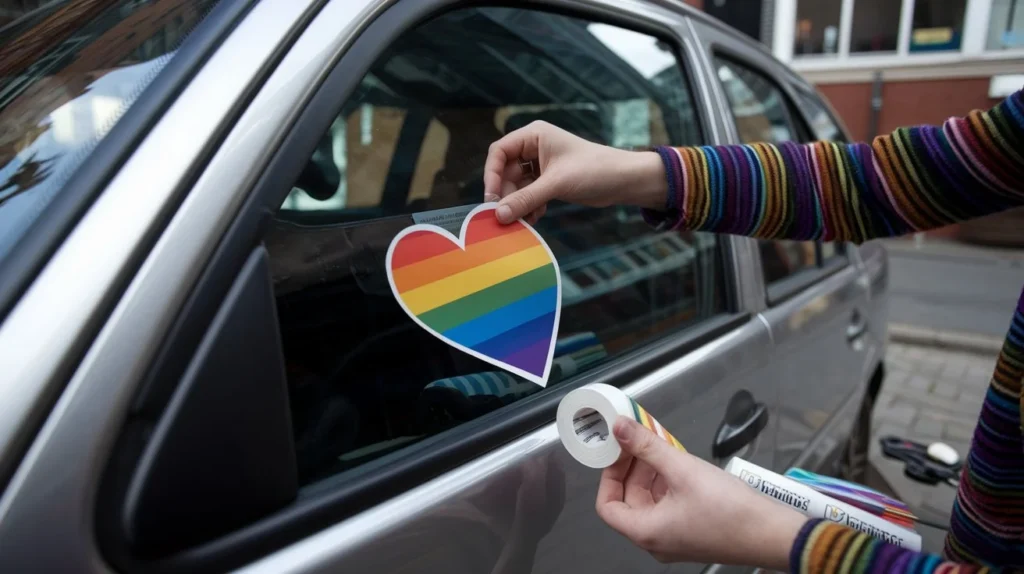
Getting a decal to sit flush on your car comes down to three things: surface preparation, application method, and patience. Whether you’re adding custom car graphics to a business van or personalising your car with a bumper sticker, following the correct approach delivers excellent outcomes.
This guide walks you through the entire application, from choosing your tools to achieving that smooth, bubble-free finish.
What You’ll Need to Apply Car Decals
Whilst many people successfully apply their own decals, professional installation is also available. If you’re working with large vehicle graphics, complex designs, or simply want guaranteed outcomes, fitting by specialists typically costs from £150-300 (prices vary based on size and complexity). However, if you prefer the DIY route or are working with smaller decals, application is quite manageable with thorough preparation.
Before you start, gather everything in one place. Having your tools ready makes application straightforward.
Essential Tools:
- Cleaning solution (warm water with a small amount of washing-up liquid)
- Isopropyl alcohol or methylated spirits
- Microfibre cloths (at least two)
- Squeegee or an old credit card
- Masking tape
- Tape measure
- Spray bottle (for wet application method)
Optional but Helpful:
- Hair dryer or heat gun
- Utility knife for trimming
- Pin or needle for stubborn bubbles
The cost for these materials typically ranges from £10-25 if you’re starting from scratch, though prices vary depending on where you shop and what you already have at home.
Preparing Your Car Surface
Vinyl bonds effectively to surfaces that are clean and free from contaminants. This step makes the difference between a decal that lasts six months or six years.
Start by washing the entire area with soapy water. Even if the surface looks spotless, there’s likely road film or polish residue you can’t see. Once washed, dry it completely with a microfibre cloth.
Next, wipe down the area with isopropyl alcohol or methylated spirits. This removes any remaining oils or product residue that water alone won’t shift. Let it air dry for a minute or two before proceeding.
Check the temperature. Vinyl behaves best when the surface temperature sits between 10-25°C. If it’s colder, park in direct sunlight for a while or use a hair dryer to warm the area gently.
Finally, do a test positioning with masking tape. Measure the area, mark the centre point if needed, and use small pieces of tape to hold the decal in place temporarily. Step back and check the alignment from different angles. This takes two minutes and ensures accurate placement.
Step-by-Step Application
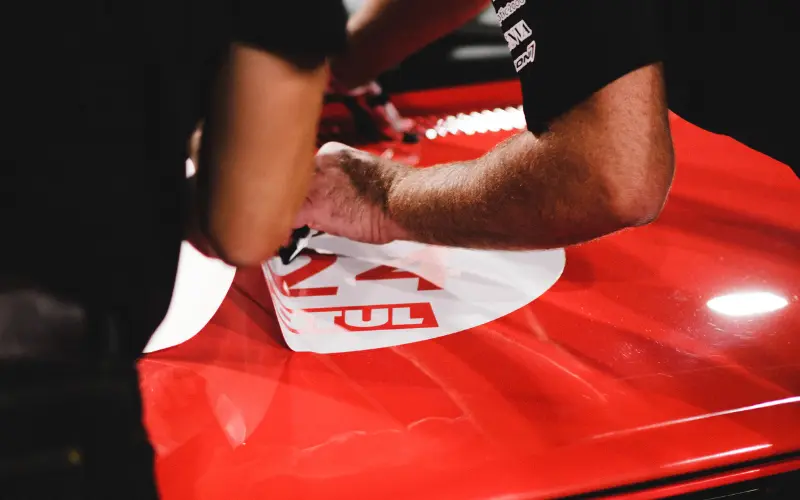
Step 1: Create a Hinge Once you’re happy with the positioning, run a strip of masking tape along the top edge of your decal. This creates a hinge that lets you flip the decal up whilst keeping it aligned.
Step 2: Peel Back the Backing Paper Flip the decal up using your hinge and carefully peel away the backing paper. For large decals, only peel back half initially to give you more control.
Step 3: Apply and Squeegee Lower the decal onto the surface gradually. Starting from the centre, use your squeegee to push out towards the edges at a 45-degree angle. Consistent, overlapping strokes ensure complete adhesion and eliminate air bubbles.
Work in sections for larger decals. Completing one section before moving to the next delivers better outcomes.
Step 4: Remove the Transfer Tape Wait about 10-15 minutes to let the adhesive set slightly. Then peel away the transfer tape slowly at a low angle, pulling it back on itself rather than straight up. If any part of the decal lifts with the tape, press it back down and wait a bit longer.
Step 5: Final Seal Go over the entire decal once more with your squeegee. This final pass secures the bond and catches any spots you might have missed.
Wet Application vs Dry Application
There are two main methods for applying decals, and choosing between them depends on the size of your decal and your experience level.
Application Method Comparison
| Feature | Wet Application | Dry Application |
| Best For | Large decals (A4 size and above), first-time applications | Small decals under 30cm, simple graphics |
| Repositioning | Allows adjustment before squeegeeing | Very limited – sticks on contact |
| Application Speed | Slower | Faster |
| Cure Time | 48-72 hours before washing | Immediate adhesion |
| Skill Level | Beginner-friendly | Requires more precision |
| Success Rate | Higher for complex placements | Good for experienced users |
| Setup | Requires spray bottle with soapy water | Minimal setup needed |
How Wet Application Functions Before lowering the decal, spray the surface liberally with soapy water (a few drops of washing-up liquid in a spray bottle). This creates a temporary barrier that lets you slide the decal into position before squeegeeing out the solution. As you push out the water, the adhesive activates and bonds.
At Magenta Signs Ltd, we typically use the wet method for vehicle graphics larger than A4 size, as it’s particularly effective for achieving accurate positioning on larger installations.
How Dry Application Functions The vinyl sticks immediately on contact, which means faster completion. You get instant adhesion, ideal for simple graphics or text where repositioning isn’t needed.
Applying Decals to Different Surfaces
Understanding how vinyl behaves on different surfaces helps you adjust your technique accordingly.
Surface Application Guide
| Surface Type | Best Method | Special Considerations |
| Glass/Windows | Wet or dry | Most forgiving surface, ideal for beginners |
| Painted Bodywork | Wet (for large), dry (for small) | Ensure paint is in good condition, free from wax |
| Textured Bumpers | Wet with heat | Apply heat to make vinyl conform to texture |
| Curved Panels | Wet with heat | Work in small sections with gradual heating |
| Van Graphics (multi-panel) | Wet | Use panel edges as alignment reference points |
Windows Glass offers a smooth surface that accepts decals brilliantly. It’s the ideal starting point if you’re new to applying vinyl.
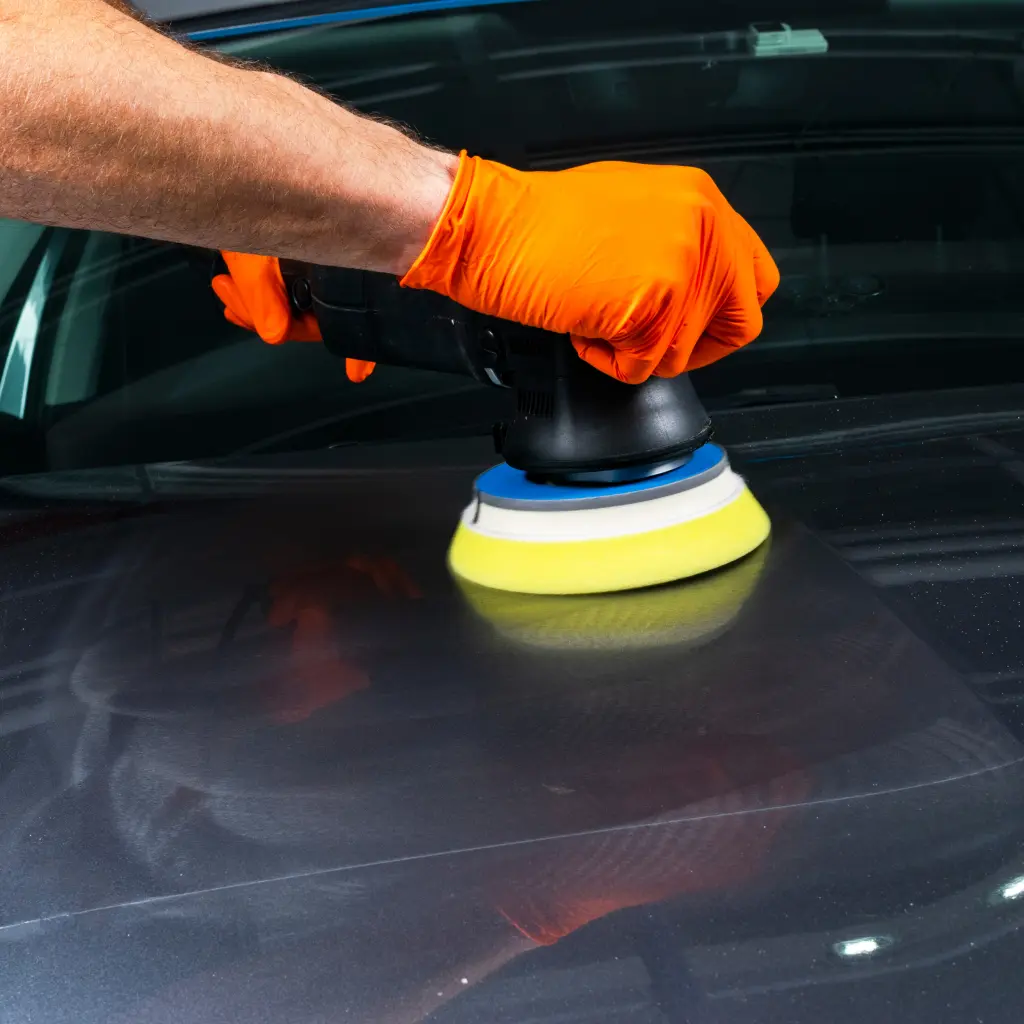
Painted Surfaces Modern factory paint handles vinyl well. Always ensure the paint is free from wax or polish residue before application.
Textured or Curved Areas These surfaces benefit from extra heat during application. Use a hair dryer to make the vinyl pliable, as it’ll conform to shapes much more easily when warm.
Large Van Graphics Commercial van graphics often span multiple panels and need precise alignment across door seams and body lines. For businesses considering comprehensive vehicle livery solutions, proper planning across multiple panels is essential. Breaking the installation into sections and using reference points (panel edges, door handles) maintains straight lines.
Essential Application Tips
Operating in shade or during cooler parts of the day gives you optimal conditions. For more detailed guidance on applying vinyl graphics across different vehicle types, mastering these fundamentals is crucial. The surface stays at the ideal temperature, and you have plenty of time to work.
Using the appropriate amount of soapy water with the wet method makes positioning easy. A light mist is enough, as this gives you the repositioning ability you need whilst ensuring adequate cure time.
Consistent squeegee strokes are key. Overlap each pass slightly and maintain steady pressure throughout.
Troubleshooting Common Issues
Air Bubbles After Application Small bubbles (under 2mm) often disappear on their own within 24-48 hours as the adhesive cures. For larger bubbles, prick them with a pin and press the air out with your squeegee, working from the outside towards the pinhole.
Edge Lifting Lift the section slightly, wipe underneath with isopropyl alcohol, let it dry, then reapply with solid squeegee pressure. Quality vinyl rarely needs an additional adhesive promoter.
Creases or Wrinkles Warm the area with a hair dryer, which makes the vinyl pliable enough to stretch slightly. Pull the section tight and squeegee it down whilst still warm.
Cold Weather Application If the temperature drops below 10°C, warm the surface with a hair dryer before application. Operating in a heated garage also helps ensure adequate adhesion.
How to Remove Decals Without Damage
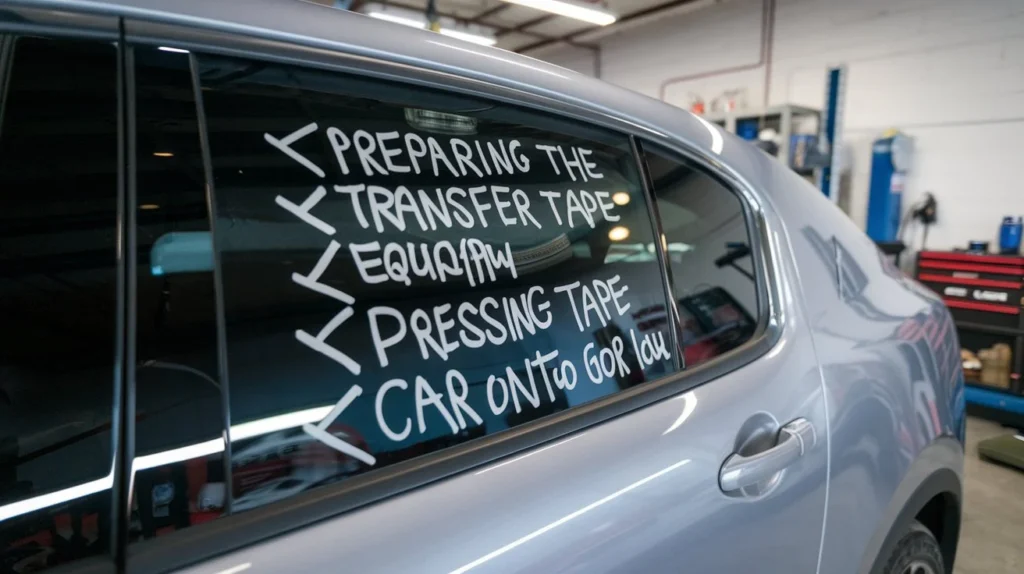
Start by heating the decal with a hair dryer. Work in sections, warming a corner until it’s hot to the touch, then gently peel it back at a low angle. Following safe decal removal methods prevents paint damage and ensures clean results. The heat softens the adhesive, allowing clean removal.
If adhesive residue remains, spray on some adhesive remover (or even WD-40) and let it sit for a minute. The residue should wipe away easily with a microfibre cloth.
For stubborn residue on glass, a plastic scraper is effective and won’t cause scratches.
FAQ: Car Decal Application
Can you put stickers on car paint without damaging it?
Yes. Quality vinyl decals use pressure-sensitive adhesives designed specifically for automotive paint. When it’s time to remove them, heat the decal first, peel slowly, and use plastic tools rather than metal.
How long do car decals last?
Quality vinyl typically lasts 3-7 years depending on conditions. Graphics on horizontal surfaces (bonnets, roofs) fade faster due to constant sun exposure, whilst vertical surfaces last longer. Regular washing and waxing around (not over) the decal extends its life.
What’s the best temperature for applying decals?
Between 10-25°C is ideal. The vinyl remains flexible enough to work with easily. If you must apply decals in cooler weather, warm the surface first with a hair dryer.
Should I wax my car before or after applying a decal?
After, and only around the decal, never over it. Wax creates a barrier that prevents adhesive from bonding. Apply the decal to a wax-free surface, then wax the surrounding paintwork once everything has cured (wait at least a week).
Can I apply decals in the rain?
Not recommended. Even light moisture affects adhesion. If you’re using the wet application method with soapy water, that’s controlled moisture applied specifically to help positioning.
How do I apply vinyl stickers to a car window?
The same method applies for glass: prepare the surface, position using masking tape, then squeegee from the centre outwards. Remove transfer tape slowly. The wet application method is particularly effective on glass. When it’s time for a refresh, removing window graphics requires the same careful approach to avoid residue.
Ready to Transform Your Vehicle Today?
Applying car decals successfully follows a straightforward sequence: prepare thoroughly, position carefully, and apply steadily.
Whether you’re adding graphics to a business vehicle or personalising your own car, the principles remain the same. Use the appropriate tools, choose the method that suits your decal size, and don’t rush the application.
At Magenta Signs Ltd, we’ve seen countless successful applications, and the ones that turn out brilliantly all share the same foundation: attention to detail at every stage. If you’re ready to add custom graphics to your vehicle, you now have everything you need to achieve outstanding outcomes.