Outdoor Wall Plaques: Complete Guide to Materials, Designs & Choosing
Material choice determines how your outdoor wall plaque performs over the years of exposure. Bronze develops an attractive patina over decades. Stainless steel maintains polish with minimal care. Acrylic offers modern aesthetics at accessible prices, but won’t last as long. Understanding these differences helps you match materials to your specific environment, budget, and aesthetic requirements without compromising on quality or longevity.
What Are Outdoor Wall Plaques?
Outdoor wall plaques are permanent or semi-permanent markers mounted on exterior walls to commemorate events, identify properties, honour individuals, or display information. Unlike indoor versions, outdoor plaques must resist rain, UV exposure, temperature fluctuations, and atmospheric pollutants whilst maintaining legibility.
Applications range from historical markers on heritage buildings to contemporary office numbers. Commercial properties use them for company identification. Quality outdoor plaques resist environmental deterioration through engineered material selection, protective finishes, and proper installation—not just thicker indoor materials. A well-specified plaque should remain legible and structurally sound for its intended lifespan, whether five years for temporary installations or fifty years for heritage markers.
Best Materials for Outdoor Plaques
Bronze Plaques for Outdoors
Bronze remains the premier choice for plaques requiring genuine permanence and prestige. The alloy—typically 80-90% copper with tin and sometimes zinc—develops a protective patina that enhances weather resistance rather than indicating deterioration.
This natural patina ranges from brown to green depending on atmospheric conditions. Coastal locations tend towards green from salt exposure; urban environments produce darker brown tones. Some clients accelerate patina development through chemical treatment, creating a uniform aged appearance from installation. Others maintain original bronze colour through regular waxing, though this demands ongoing effort.
Stainless Steel Plaques
Stainless steel plaques delivers contemporary aesthetics and excellent weather resistance at more accessible costs. The chromium content (minimum 10.5%) creates a passive oxide layer that self-repairs when scratched, providing ongoing corrosion protection without maintenance.
Grade 316 suits marine and coastal environments where salt air corrodes lesser metals. The molybdenum addition dramatically improves chloride resistance. Standard 304 suffices for most inland applications and costs 20-30% less. Specifying wrong grades leads to disappointing results—304 will pit and stain coastally despite appearing identical initially.
Acrylic Plaques
Acrylic offers cost-effective solutions where lifespan expectations run to years rather than decades. The material—polymethyl methacrylate—provides excellent clarity, takes colour well, and resists UV degradation better than most plastics through stabilisers.
Quality matters enormously. Cast acrylic outperforms extruded versions significantly in outdoor applications. Cast acrylic better resists crazing (surface cracking), maintains clarity longer, and handles temperature variations without distorting. Extruded acrylic costs 30-40% less but looks tired after a few years outdoors.
Thickness affects both longevity and perceived quality. Use a minimum of 10mm for outdoor applications; 15mm or 20mm for larger plaques. Thin acrylic flexes in the wind, creaks with temperature changes, and appears cheap. Proper thickness eliminates these issues whilst adding minimal cost.
Aluminium Plaques
Aluminium balances cost, weight, and durability effectively. The material naturally develops a protective oxide layer, though less robust than stainless steel. Anodising enhances this protection substantially whilst allowing colour integration into the protective layer rather than applied surface coating.
Colour choices remain more limited—typically metallics, blacks, and earth tones—but these stay stable for 10-15 years outdoors. The lightweight nature (about one-third of bronze’s weight) suits applications where wall strength limits options or where you want large plaques without extensive mounting infrastructure.
Brass Plaques
Brass—an alloy of copper and zinc—provides traditional aesthetics at costs below bronze. The golden colour suits heritage applications, traditional architecture, and situations where you want metal’s presence without bronze’s expense or stainless steel’s contemporary associations.
Unlike bronze, brass requires maintenance to preserve its polished appearance. Unprotected brass tarnishes quickly, developing a dull brown or greenish surface. Most brass plaques receive clear lacquer protection to maintain their golden colour. This lacquer needs reapplying every few years—more frequently in harsh environments. Brass’s softness compared to bronze or stainless steel means it dents more easily. This matters little for wall-mounted plaques protected from impact.
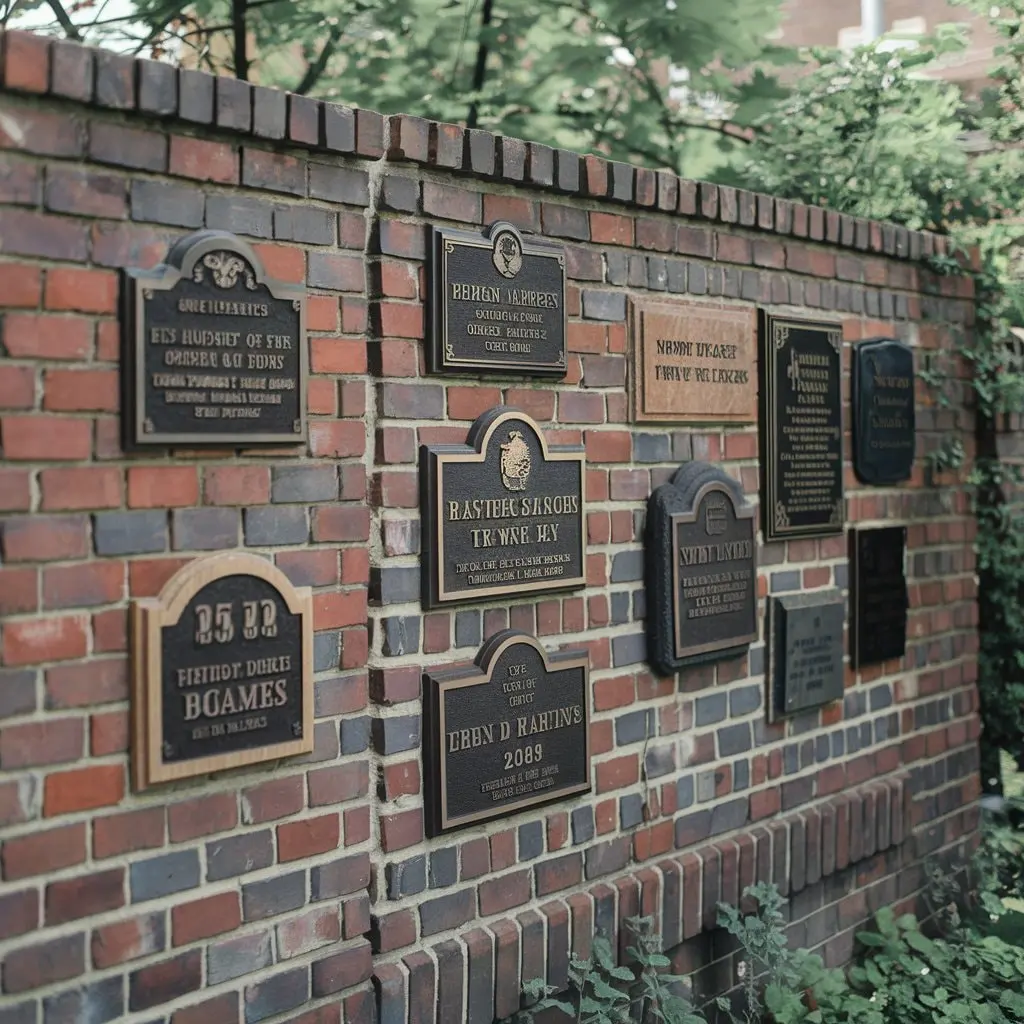
Material Comparison for Outdoor Wall Plaques
| Material | Weather Resistance | Expected Lifespan | Maintenance | Cost (per m²) |
| Bronze | Excellent | 50+ years | Very Low | £300-800 |
| Stainless Steel (316) | Excellent | 30+ years | Very Low | £150-400 |
| Acrylic | Good | 3–8 years | Low | £40-120 |
| Aluminium (Anodised) | Very Good | 15-25 years | Low | £80-250 |
| Brass | Good | 20-30 years | Medium | £120-350 |
| Granite | Excellent | 100+ years | Very Low | £200-800+ |
| Slate | Very Good | 30-50 years | Low | £100-300 |
Design Considerations for Outdoor Plaques
Size and Visibility
Outdoor plaques need legibility from appropriate distances. Text requires approximately 25mm height for every 3 metres of viewing distance. A plaque viewed from 9 metres needs a minimum of 75mm lettering. Going larger rather than smaller—squinting to read plaques undermines their purpose.
Plaque proportions matter aesthetically. Rectangular plaques typically use landscape orientation (wider than tall) unless architectural constraints dictate otherwise. Avoid extreme aspect ratios that look stretched or compressed.
Typography and Lettering
Serif fonts generally read better at a distance, though modern sans-serifs designed for signage perform well. Avoid decorative fonts that prioritise style over legibility—outdoor plaques must be read, not just admired.
Letter spacing matters enormously. Text appearing fine on screen often looks cramped when fabricated. Specify generous spacing, particularly for engraved or routed letters. Contrast determines readability in varying light. Deep engraving creates shadows that enhance contrast. Raised letters cast shadows that improve legibility.
Colour Selection
Natural material colours often work best. Bronze’s patina, stainless steel’s metallic sheen, stone’s natural tones—these require no applied colour yet provide attractive, durable aesthetics. When adding colour, consider longevity. Anodised colour in aluminium lasts decades. Painted finishes deteriorate faster, requiring repainting every 5-10 years. Powder coating outperforms liquid paint but still demands eventual renewal.
Installation and Maintenance
Mounting Methods
Through-fixing—drilling through the plaque and wall—provides the strongest mounting but leaves visible fixings. Stainless steel or brass screws suit most applications, often with decorative heads complementing plaque design. Hidden mounting uses studs welded to the plaque’s rear that locate into drilled holes, creating a clean front appearance. This requires precise positioning and works best on brick, block, or concrete walls.
Adhesive mounting suits lighter plaques on suitable surfaces. Specialist construction adhesives create permanent bonds on sound masonry, but weather exposure can cause failure over the years. Best reserved for lightweight acrylic rather than heavy metal or stone.
Material-Specific Care
Bronze requires virtually no maintenance unless you want to prevent patina development. Annual waxing preserves the original bronze colour—stainless steel benefits from occasional washing with soapy water to remove grime. Avoid abrasive cleaners that damage the passive oxide layer.
Acrylic needs gentle cleaning with soft cloths and non-abrasive cleaners. The material scratches easily. Brass plaques require the most maintenance—clean tarnish with brass polish, reapply clear lacquer every 2-3 years to maintain a bright appearance. Stone plaques generally require only occasional brushing to remove dirt. Avoid pressure washing, which can damage softer stones.
Frequently Asked Questions
Can I add lighting to outdoor plaques?
Yes. Simple spotlights above or below the plaque work well and create dramatic shadows on the engraved text. For a modern look, install backlighting that shines through translucent materials like acrylic, creating a striking effect often seen in innovative signage solutions. Solar-powered lights are suitable for locations without electrical access. Warm white suits traditional plaques, while cooler lighting works better for modern designs. Add timers or sensors so lights turn on automatically at dusk.
What finish options exist for bronze plaques beyond natural patina?
Chemical patinas create controlled colour finishes—green, brown, or black—in days rather than waiting years for natural development. These need sealing to stop further colour change. Polished bronze keeps the bright metallic look but needs regular waxing and maintenance. Oil-rubbed finishes create an antique effect with lighter raised areas and darker recesses. Some suppliers offer painted bronze, though this somewhat defeats the point of choosing bronze in the first place.
How do weather conditions affect installation?
Don’t use adhesive mounting in cold weather—most adhesives require mild temperatures (typically above 5–10°C) to cure properly. Acrylic becomes brittle in freezing temperatures, so handle it carefully in winter. Metal plaques can go up in any temperature, though frozen ground makes drilling harder. Never install during rain—moisture stops adhesives from bonding correctly. High winds make handling large plaques dangerous. Wait for calm, dry, mild weather when possible.
Do I need different fixings for different wall materials?
Yes. Plaques on brick and concrete need masonry drill bits and outdoor-rated wall plugs (nylon or metal). Timber walls need wood screws matched to the timber thickness. Rendered walls need longer fixings that go through the render into a solid wall behind. Cladding systems may need specialist fixings. Old stone walls with lime mortar need careful drilling to avoid cracks.
Can outdoor plaques be relocated?
It depends on how they’re fixed. Through-bolted plaques with mechanical fixings can be removed and moved, though you’ll see the old screw holes. Hidden mounting is basically permanent—you usually damage the plaque or wall by removing it. Adhesive-mounted plaques might come off with heat or solvents, but this often ruins the finish. If you think you’ll need to move the plaque later, tell the installer upfront so they use removable fixings.
How do building regulations affect plaque installation?
Small name plaques on offices usually don’t need permission. Listed Building Consent or planning permission may be required in conservation areas. Large plaques sticking out from the wall might need planning permission. Lit-up plaques sometimes count as advertising and need Advertisement Consent. Any work on listed buildings needs consent, even for small changes. Check with your local planning authority before starting, especially for anything beyond a simple office name plaque.
What’s the environmental impact of different materials?
Bronze and brass need lots of energy to produce (mining and smelting), but they can be recycled completely. Stainless steel also takes significant energy to make, but lasts forever and is fully recyclable. Aluminium production uses lots of energy, but the material is light (reducing transport emissions) and can be recycled endlessly. Acrylic comes from oil and doesn’t biodegrade. Think about the whole lifetime—a bronze plaque lasting 50+ years might have less total environmental impact than replacing acrylic plaques every decade.
Conclusion
Selecting appropriate outdoor plaques requires balancing durability, aesthetics, and budget. Bronze delivers maximum longevity for heritage applications. Stainless steel provides modern durability at accessible costs, while acrylic suits temporary needs or budget constraints. Understanding your environment’s specific demands—coastal salt air, urban pollution, or protected rural settings—guides material selection towards options that perform well rather than disappoint. Just as with various display boards used in outdoor signage, choosing the right material and finish ensures long-term performance. Quality plaques correctly specified and installed serve their purpose for decades.