
Wayfinding signs guide people through physical spaces, from hospital corridors to shopping centres to university campuses. These navigational aids combine directional arrows, informational displays, identification markers, and regulatory notices to help visitors reach their destinations confidently. Effective wayfinding signage reduces confusion, improves traffic flow, and creates welcoming environments where people feel oriented rather than lost. As part of comprehensive signage systems, wayfinding serves a critical navigation function.
The difference between good and poor wayfinding becomes obvious when you’re running late for an appointment in an unfamiliar building. Clear signs get you there on time. Confusing or missing signs leave you wandering corridors, asking for directions, and arriving flustered. This guide explores how wayfinding signage works, the different types available, and what makes a wayfinding system truly effective.
What is a Wayfinding Sign, and Why is it Important?
Wayfinding signage helps people position themselves in physical space and navigate from one location to another. The system answers three fundamental questions: Where am I? Where do I need to go? How do I get there?
These systems matter because most people visit unfamiliar spaces regularly. Hospitals treat patients who’ve never been there before. Universities welcome new students each year. Transport hubs serve travellers from around the world. Without clear wayfinding, these spaces become frustrating mazes that waste time and create stress.
Beyond preventing people from getting lost, effective wayfinding creates positive first impressions, reduces demands on staff who would otherwise give constant directions, and ensures safety by clearly marking emergency exits and evacuation routes.
Understanding the Basics of Wayfinding
Wayfinding integrates several signage types that work together as a coherent system. Directional signs show which way to go, using arrows and distance information. Informational signs provide context about facilities, opening hours, or building layouts. Identification signs label specific rooms, departments, or landmarks. Regulatory signs indicate rules, restrictions, or required behaviours.
The effectiveness depends on visual consistency. Colours, fonts, icon styles, and mounting heights should remain predictable throughout a space. When every sign looks different, people don’t recognise them as part of a coordinated system. This uniformity extends to terminology as well. If you call something “toilets” on one sign and “WC” on another and “restrooms” on a third, you’ve created three apparently different destinations.
Strategic placement matters as much as design. Signs need to appear at decision points where people naturally pause to orient themselves: building entrances, corridor junctions, stairwell landings, and lift lobbies. Placing a sign five metres past a turning doesn’t help someone who’s already walked past their destination. Enhancing indoor navigation requires understanding these principles and applying them consistently throughout a space.
What Are the Different Types of Wayfinding Signage?
Directional Signage
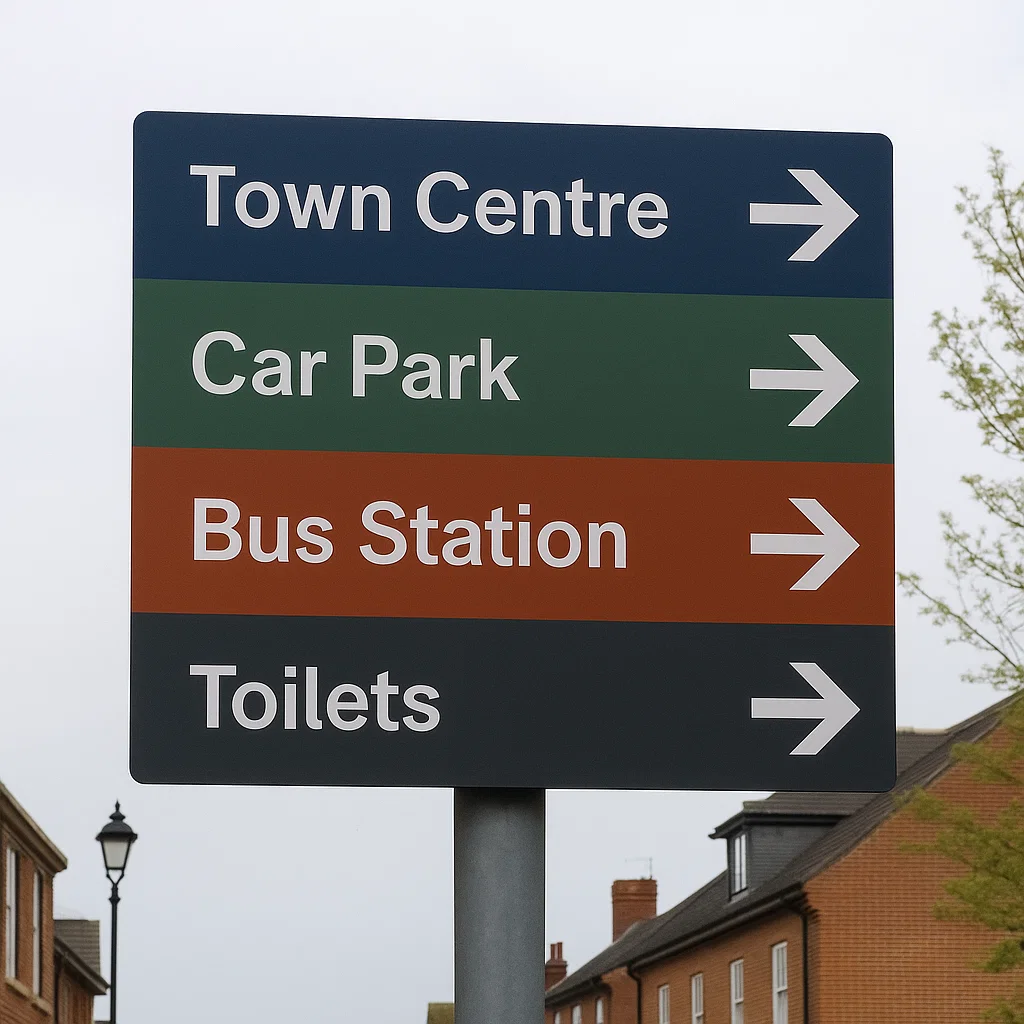
Directional signs point the way, using arrows, distances, and destination names. They answer “How do I get there?” by showing which path to follow. Effective directional signage appears before you need to make a decision, giving you time to prepare for turns or level changes.
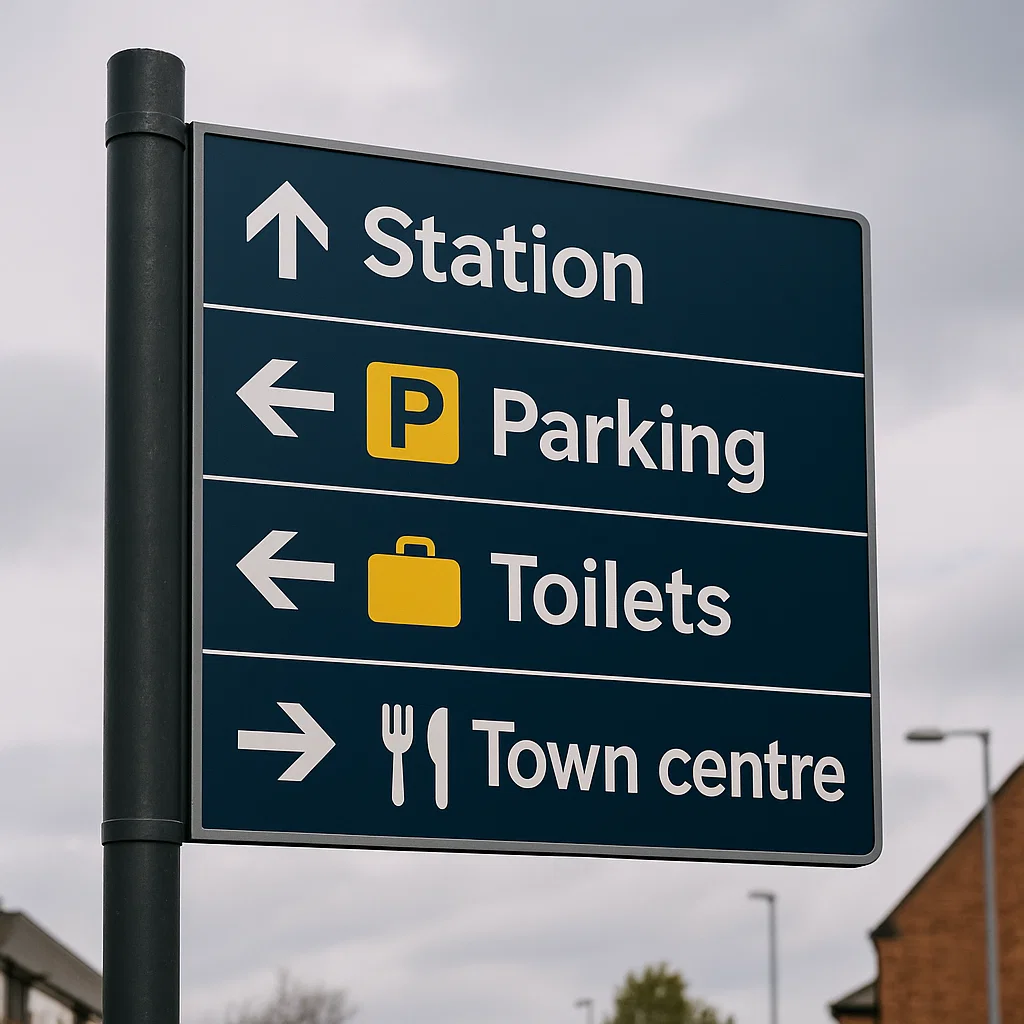
Arrows should be unambiguous. When multiple destinations share a route, the sign should list them together under a single arrow. When destinations diverge, separate arrows make the split clear. Distance information helps people gauge how far they need to walk and whether alternative routes might be quicker.
Identification Signage
Identification signs confirm locations. Room numbers, department names, building markers, and facility labels all fall into this category. They answer “Where am I?” and “Is this the place I’m looking for?”
These signs need to be visible from the approach so people can confirm their destination before they arrive. The ideal placement allows someone walking along a corridor to read room numbers without stopping or backtracking.
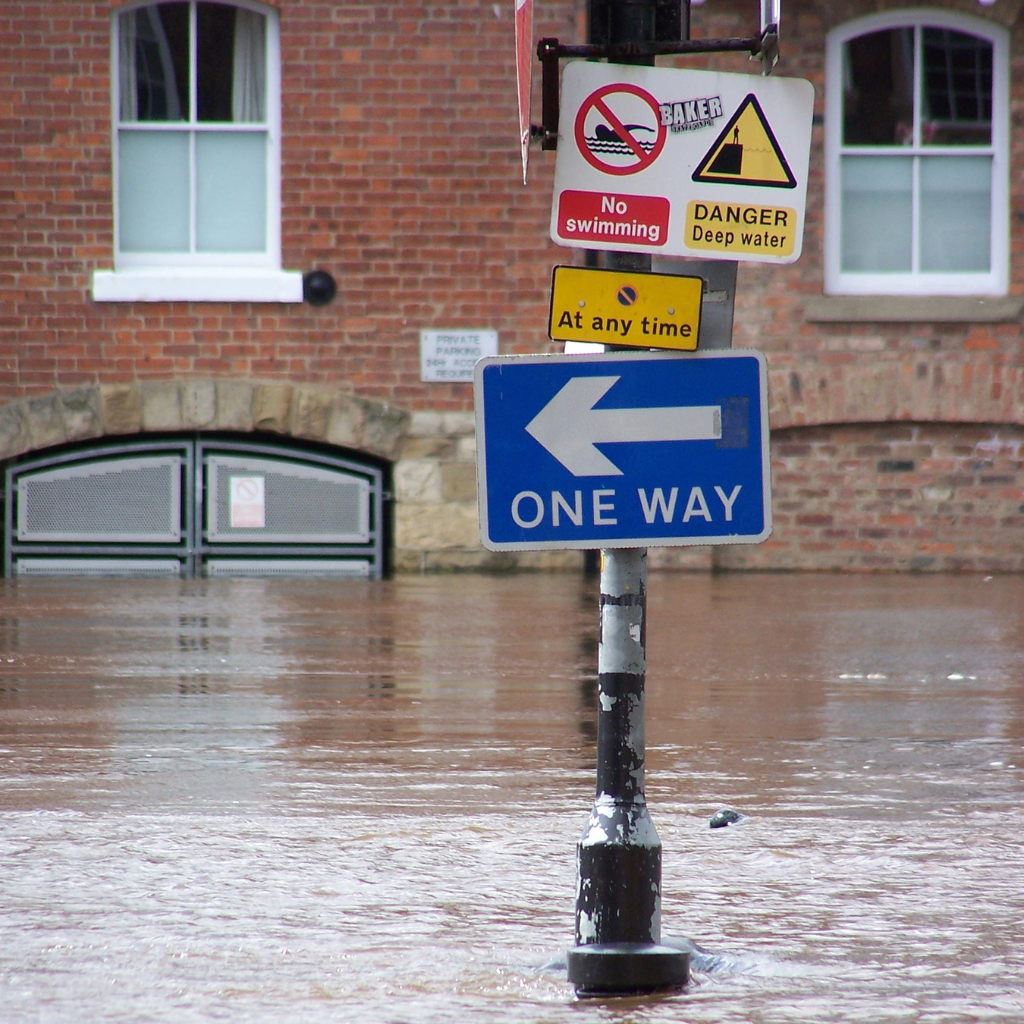
Informational Signage
Informational signs provide context about facilities, services, opening hours, or building layouts. Floor directories in building lobbies, “you are here” maps at key points, and facility information boards all serve informational purposes.
Maps work best when oriented to match the viewer’s perspective. A map that requires mental rotation to align with your position creates unnecessary confusion. Highlighting the current location with a clear marker helps people understand where they are in relation to their destination.
Regulatory Signage
Regulatory signs indicate rules, restrictions, and required behaviours. “No entry”, “staff only”, “emergency exit”, and accessibility symbols communicate what’s permitted or prohibited. These often carry legal weight and must meet specific standards for visibility and symbol usage.
Emergency exit signs require illumination to remain visible during power failures, with regulations specifying exact illumination levels, viewing distances, and positioning heights. Accessibility regulations mandate that facilities for disabled visitors be clearly marked with standard symbols. Compliance affects both legal obligations and user safety.
Key Elements of Effective Wayfinding Signage
Visibility and Clarity
Signs must be seen before they’re needed. This means considering sightlines, lighting conditions, and potential obstructions. A perfectly designed sign mounted behind a pillar serves no purpose.
Font selection affects readability at distance. Sans-serif typefaces generally perform better than serif fonts on signage. Text needs a sufficient size for the expected viewing distance. Contrast between text and background should meet accessibility standards, benefiting people with visual impairments whilst improving readability for everyone.
User-Centred Design
Effective wayfinding considers who’s using it. A system designed for fit, mobile adults might fail elderly visitors or people with visual impairments. Accessible design incorporates tactile elements, high-contrast colours, and positioning that works for wheelchair users. These considerations aren’t just about compliance, they’re about creating environments that genuinely work for everyone.
Cultural considerations matter in international environments. Symbols that seem universal might carry different meanings in different cultures. Text in multiple languages helps, but only when translations are accurate and appropriately prioritised.
Materials and Technology in Wayfinding Signage
Outdoor wayfinding requires weather-resistant materials. Aluminium, stainless steel, and high-grade plastics withstand rain, temperature fluctuations, and UV exposure. Coatings protect against corrosion in coastal environments or areas using road salt.
Indoor signage operates in controlled environments, permitting wider material choices. Acrylic, vinyl graphics, and printed substrates all work well. The selection often depends on aesthetic preferences and budget constraints rather than pure durability requirements.
Illumination extends wayfinding functionality beyond daylight hours. Internal illumination keeps signs visible in dim conditions. External lighting highlights signs without requiring electrical connections within the sign itself. Buildings used primarily during daylight hours with good natural light might not require illuminated wayfinding, whilst 24-hour facilities benefit significantly from illuminated or backlit signage.
Digital displays offer unmatched flexibility for changing content. Information updates happen remotely without physical sign replacement. Interactive touchscreens let visitors search for specific destinations and receive customised directions. The trade-off involves cost, maintenance, and power requirements. Digital wayfinding displays typically range from £1,000 to £5,000 per screen, whilst simple internal directional signs might cost £50 to £150 per unit. Comprehensive systems for large buildings can run into thousands of pounds. Please note these are estimated costs in pounds sterling and may vary based on specifications, materials, location, and installation complexity. Most comprehensive wayfinding systems combine both approaches, using static signs for permanent routes and digital displays for variable information.
How Wayfinding Signage Enhances Safety and Compliance
Emergency evacuations depend on clear, immediately recognisable exit signage. Lives depend on people finding exits quickly during emergencies, which is why regulations specify exact requirements for these critical signs.
Wayfinding contributes to everyday safety beyond emergencies. Clear marking of restricted areas keeps unauthorised people out of potentially dangerous spaces. Proper identification of medical facilities helps people find urgent care. Height-restriction warnings prevent vehicles from entering areas where clearance is insufficient.
| Aspect | Contribution |
| Regulatory Compliance | Ensures adherence to safety standards |
| Traffic Management | Reduces congestion and enhances flow |
| Emergency Evacuations | Provides clear routes for safe exits |
| Accessibility | Supports universal design principles |
| Information Clarity | Minimises confusion and accidents |
Meeting these requirements isn’t just about avoiding penalties. It’s about creating spaces that work safely for everyone who uses them.
The Role of Wayfinding in Business and Public Spaces
Businesses benefit when customers find what they need without asking for help. Retail environments use wayfinding to guide shoppers through stores, balancing customer convenience with commercial objectives. Clear department markers and product category signs reduce the frustration that drives customers to competitors.
Office buildings use wayfinding to project professional competence. Visitors arriving for meetings shouldn’t need to ask reception for directions to every conference room. Clear, attractive signage creates positive impressions about organisational capability.
Healthcare facilities reduce stress through effective wayfinding. Patients and visitors already face medical anxieties. Getting lost on the way to an appointment compounds that stress unnecessarily. Investment in clear wayfinding demonstrates commitment to patient experience.
Transport hubs move millions of people daily. Airports, railway stations, and bus terminals all depend on wayfinding systems that work across language barriers and serve travellers who’ve never visited before. The economic cost of poor wayfinding includes missed connections, flight delays, and frustrated passengers.
Educational institutions welcome new cohorts annually. Students need to navigate unfamiliar campuses whilst managing new academic and social pressures. Effective wayfinding helps them attend the right classes at the right times, reducing stress during transition periods.
Frequently Asked Questions
What is wayfinding signage?
Wayfinding signage is a coordinated system of visual cues that helps people navigate through physical environments. It includes directional, identification, informational, and regulatory signs working together to provide comprehensive navigation support throughout a space. Effective wayfinding forms part of broader signage systems that serve multiple communication functions within buildings and public spaces.
What are the four types of wayfinding signs?
The four main categories are directional signs (showing routes with arrows and distances), identification signs (labelling specific locations), informational signs (providing maps and facility details), and regulatory signs (indicating rules and safety information). Each serves a distinct purpose within the overall wayfinding system.
Where is wayfinding signage used?
Wayfinding signage is essential in any environment where people need to navigate independently. This includes hospitals, universities, shopping centres, airports, railway stations, office buildings, museums, car parks, and large venues. Both public and private spaces benefit from clear wayfinding that reduces confusion and improves the visitor experience.
How much does wayfinding signage cost?
Costs vary significantly based on system complexity and materials. External illuminated signs cost £200 to £800 depending on size and features. Most projects benefit from phased implementation, starting with critical navigation points and expanding as budget permits. All costs mentioned are estimates in pounds sterling and subject to variation based on specific requirements and installation.
What makes wayfinding signage effective?
Effective wayfinding requires signs that are visible before needed, messages that are immediately understandable, and uniform design throughout the system. The system should consider accessibility needs, cultural differences, and how people actually move through the space rather than theoretical ideal routes. Strategic placement at key decision points ensures signs appear exactly where people need them.
Do wayfinding signs need to be illuminated?
Emergency exit signs legally require illumination. Other wayfinding signs benefit from illumination when buildings operate in dim conditions or after dark, but it’s not universally necessary. The decision depends on usage patterns, ambient lighting, and budget considerations.
Create Effective Wayfinding for Your Space
Effective wayfinding systems require understanding how people actually move through your space rather than how you imagine they should. This means observing real behaviour, identifying where confusion occurs, and placing signs where they genuinely help.
Good wayfinding becomes invisible through its effectiveness. People shouldn’t consciously notice the signs because navigation feels natural and intuitive. When you need to think hard about following directions, the system has failed.
Professional expertise helps avoid common pitfalls in wayfinding design. Factors like viewing angles, lighting conditions, and user behaviour patterns all influence what works in practice versus what looks good on paper. At Magenta Signs, we create wayfinding solutions tailored to specific environments and user needs, considering everything from material durability to accessibility requirements. Our approach balances aesthetic appeal with practical functionality, ensuring systems continue performing effectively year after year. Contact us to discuss how strategic wayfinding can improve navigation, accessibility, and user experience in your space.