
An acrylic wall plaque is a modern signage solution made from a clear, hard-wearing plastic that gives the refined appearance of glass without any of the fragility. Whether you’re fitting out a professional reception area, adding branded signage to a retail space, or simply looking for something that feels considered and permanent on a home wall, acrylic plaques are among the most versatile options in the indoor signage range available today.
They’re precision-cut, customisable, and genuinely built to last, which is why you’ll find them across corporate offices, boutique salons, healthcare facilities, and private homes alike.
Key Takeaways
- Acrylic wall plaques offer a sleek, glass-like finish that suits both commercial and residential settings
- Highly durable, resistant to yellowing, and hold their clarity over time
- Available in clear, frosted, and coloured finishes with gloss or matte surface options
- Fully customisable in size, shape, colour, and design, including logos and printed graphics
- Mounted using standoffs or adhesive fixings, with standoffs creating a distinctive floating effect
- Suitable for indoor and outdoor use across a wide range of environments
What Are Acrylic Wall Plaques?
Acrylic wall plaques are flat panels, typically made from cast or extruded acrylic sheet, cut and finished to carry a name, message, logo, or directional information on a wall. The material itself, often referred to by the trade name Perspex, is a form of thermoplastic that’s optically clear, lightweight, and considerably more impact-resistant than glass.
What sets them apart from most signage options is how they behave with light. When light catches a well-made acrylic plaque, particularly one mounted on standoffs so it sits proud of the wall, it has a depth and quality that printed foam board, vinyl banners, and standard plastic signs simply don’t replicate.
The material is made by polymerising methyl methacrylate, which produces that glass-like clarity. It’s around 50% lighter than glass, far harder to shatter, and unlike lesser plastics, quality acrylic doesn’t yellow over time. It holds its appearance well for years, even in environments with meaningful UV exposure.
For signage work, acrylic is typically laser-cut to produce crisp edges and precise custom shapes. The surface also accepts direct UV printing, so full-colour logos and graphics can be applied with excellent resolution and lasting durability.
How Acrylic Compares to Other Plaque Materials
| Material | Aesthetic | Durability | Best Suited For |
| Acrylic | Modern, transparent, glass-like | High, impact and UV resistant | Commercial interiors, contemporary spaces, outdoor signage |
| Wood | Warm, natural, traditional | Moderate | Heritage settings, home décor, rustic branding |
| Metal (brushed/stainless) | Industrial, premium, weighty | High | High-end corporate environments, architectural plaques |
| Foam/PVC | Flat, functional | Lower lifespan | Temporary signage, short-term applications |
Acrylic occupies a genuinely useful middle ground. It carries the refined appearance of glass or polished metal, with easier installation and considerably more scope for customisation. If you’re still deciding on format, it’s worth reading about how signs and graphics differ across different business applications before settling on a material.
Types of Acrylic Wall Plaques
| Type | Appearance | Common Use |
| Clear acrylic | Fully transparent, glass-like | Printed graphics, floating text, logo plaques |
| Frosted acrylic | Diffused, matte-textured surface | Understated corporate signage, directional plaques |
| Coloured acrylic | Solid colour throughout the sheet | Brand-matched plaques, bold feature signage |
| Mirror acrylic | Reflective, metallic-effect surface | Premium interiors, award plaques, decorative displays |
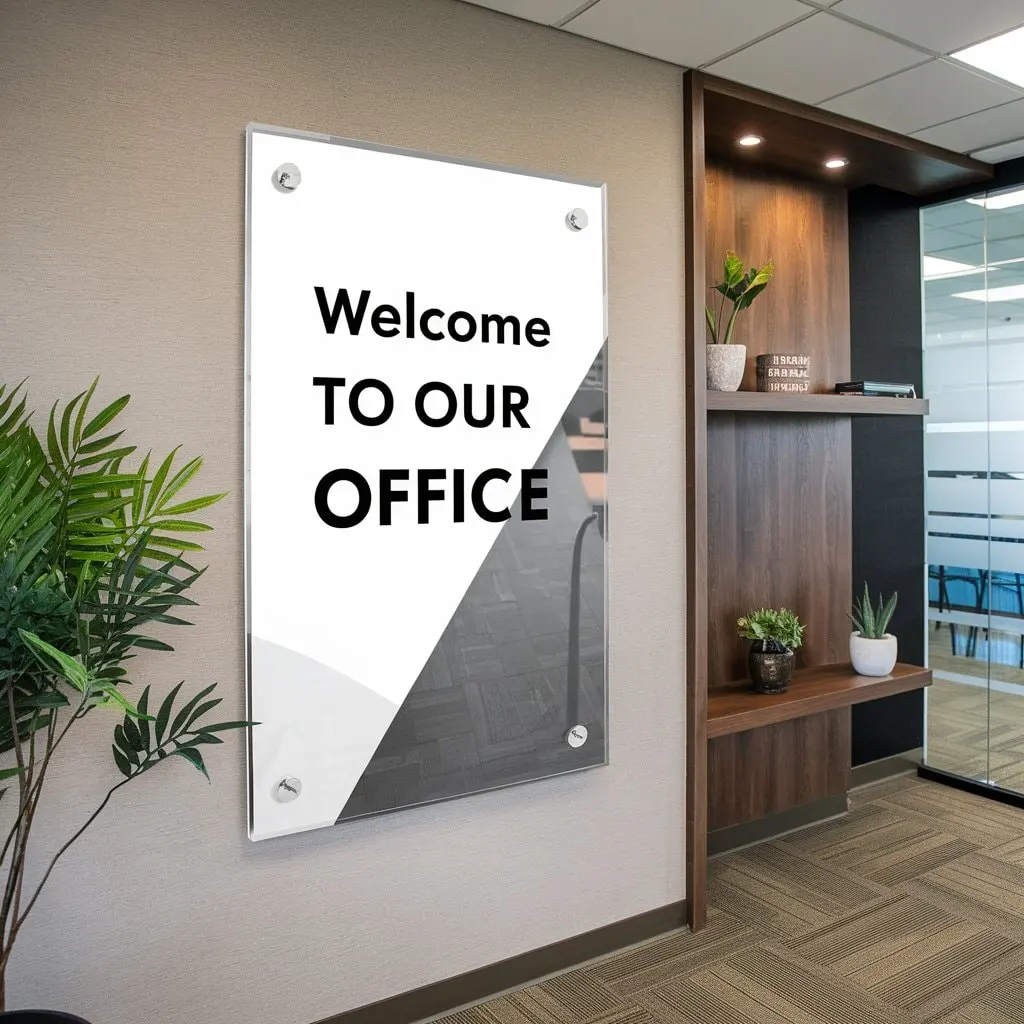
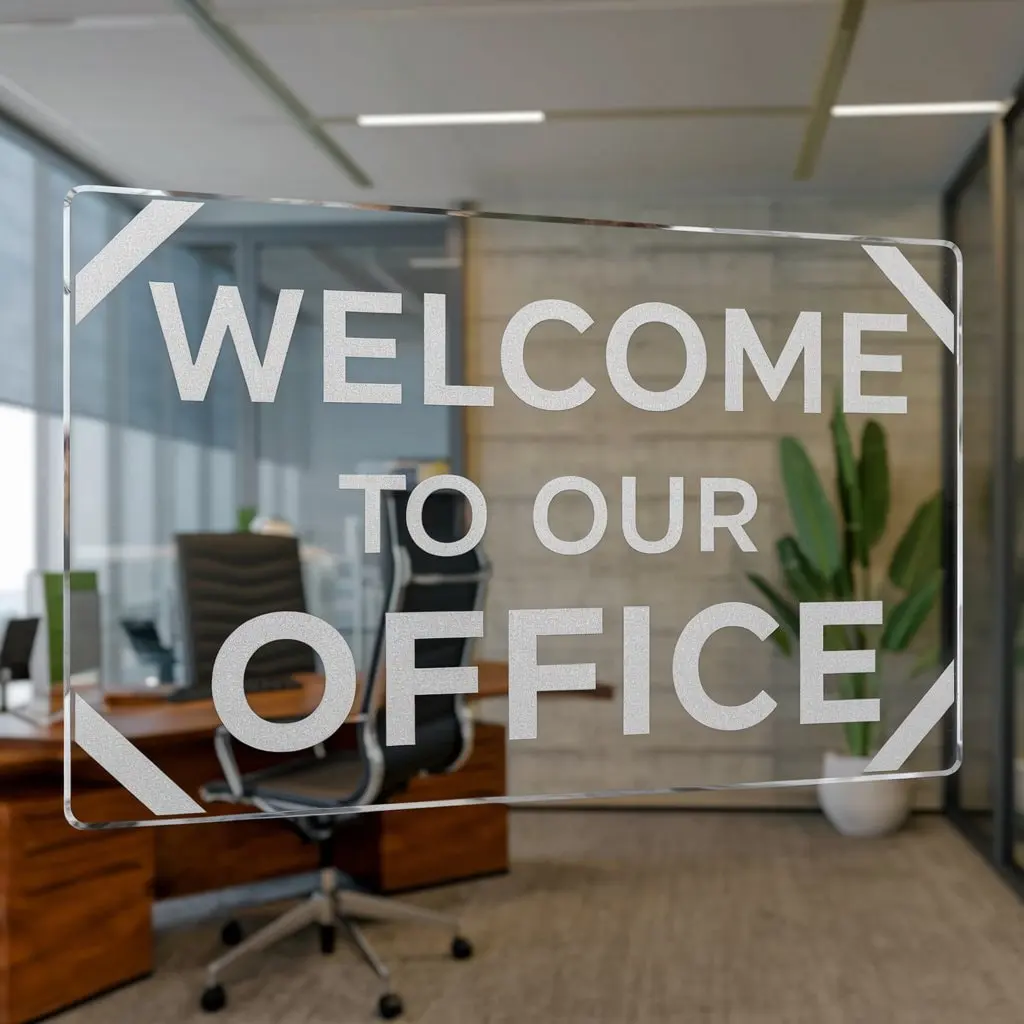
Clear acrylic with reverse-printed text or graphics is one of the most widely used options for offices and retail environments. The design is printed on the reverse face and reads through the clear surface, giving it a layered quality that looks far more intentional than its production cost might suggest. Knowing the types and benefits of digital printing helps you ask the right questions when choosing a supplier. Frosted finishes suit wayfinding and information plaques well, particularly where legibility takes priority over visual drama.
On surface finish, gloss amplifies colour and performs well under interior lighting. Matte reduces glare and tends to read as more considered in professional settings where the signage is there to inform rather than to draw attention to itself.
Where Are Acrylic Wall Plaques Used?
Offices and corporate environments are the most natural home for acrylic plaques. Reception signs, boardroom name plates, directional signage, and desk nameplates all benefit from the clean and professional character acrylic brings. A frosted or clear reception sign with a company logo, mounted on standoffs against a feature wall, makes an immediate impression on anyone who walks through the door. Businesses that want to carry that branded look further into the space often combine acrylic plaques with wall wraps for commercial spaces for a cohesive finish throughout.
Retail, hospitality, and leisure spaces use them for menus, room numbers, service information, and brand touchpoints throughout the customer journey. Acrylic holds up well in high-traffic environments, which matters when signage takes a daily knock.
Awards and recognition is a strong use case that often gets overlooked. Custom acrylic wall plaques work well as employee recognition awards, industry accolades, and milestone markers. The transparency of clear acrylic lends these pieces a trophy-like quality without the bulk of traditional crystal.
Healthcare and education settings rely on acrylic for wayfinding and room identification. It cleans easily, wears well, and can incorporate braille or tactile lettering to meet accessibility requirements.
Residential demand has grown steadily in recent years. House name plates, flat number signs, and personalised home plaques hold up well outdoors, and the scope for custom shapes means homeowners can commission something genuinely individual rather than settling for a standard catalogue option.
What Can Be Customised on an Acrylic Wall Plaque?
Custom acrylic wall plaques are more accessible than most people expect, and you’re not limited to stock sizes or off-the-shelf designs. Here’s what can typically be tailored:
- Size and shape, from small door plaques to large-format reception signs, with custom profiles achievable through laser cutting
- Acrylic type and colour across clear, frosted, coloured, mirror, or layered combinations
- Surface finish in gloss or matte, depending on the environment and the effect you’re after
- Printed graphics using full-colour UV printing for logos, photography, or detailed artwork applied directly to the surface
- Cut-out lettering, where individual letters or numbers are cut from an acrylic sheet and mounted to create a raised, dimensional finish
- Mounting style across standoffs, flush mount, or adhesive fixings depending on wall type and aesthetic preference
- Thickness, typically available in 3mm, 5mm, or 10mm, with thicker acrylic suiting larger-format applications
When briefing a supplier, artwork supplied in a vector format such as AI or EPS will always give the sharpest output, particularly for cut lettering and fine graphic detail. High-resolution raster files can work in many cases, but a vector is the cleaner starting point.
How to Choose the Right Acrylic Wall Plaque
For indoor applications, most standard acrylic grades perform well. For outdoor use, it’s worth confirming that the acrylic is UV-stabilised, as this makes a meaningful difference to how the material holds up over time when exposed to direct sunlight. In coastal settings where salt air is a factor, stainless steel standoffs and fixings are a sensible choice for long-term performance.
Scale is something that catches people out more often than you’d expect. A plaque that looks proportionate on screen can feel underwhelming once it’s up on a large wall. If you’re commissioning a reception sign for a feature wall, going slightly larger than your initial instinct usually produces a better result. A plaque that fills roughly 40 to 60 percent of its visual space tends to feel well-proportioned rather than lost.
Matching the finish to the interior is worth thinking about before you commit to a specification. Spaces with brushed aluminium fixtures sit well with mirror acrylic, or silver-tinted options. Light interiors with white walls suit clear acrylic with printed graphics or frosted lettering. Coloured acrylic comes into its own when you’re working with a defined brand palette and want the plaque to carry that identity directly.
Mounting affects the final look as much as anything else about the plaque. Standoffs, the small metal pillars that hold the sign away from the wall surface, are available in chrome, satin, and brushed finishes. Adhesive flush mounting works well for lighter pieces or walls where drilling isn’t practical.
How to Install Acrylic Wall Plaques
| Component | Function | Visual Effect |
| Standoffs | Holds the plaque at a fixed distance from the wall | Creates a floating, three-dimensional appearance |
| Screws | Secures standoffs to the wall | Hidden behind standoff barrel |
| Wall anchors/plugs | Provides stability in masonry or plasterboard | Not visible once plaque is in place |
- Mark the fixing points using the supplied template, and use a spirit level at this stage to ensure everything is straight before you drill
- Drill and plug to the correct depth for your wall type, using anchors suited to plasterboard or masonry as appropriate
- Fix the standoff barrels into the wall firmly without overtightening
- Position the plaque by aligning its pre-drilled holes with the standoff barrels
- Thread the front caps onto the standoffs by hand, as finger-tight is sufficient and avoids any risk of cracking the acrylic around the fixing point
For adhesive-mounted plaques, clean the wall surface thoroughly before application. Position carefully as adhesive fixing doesn’t allow for repositioning once contact is made. Apply firm pressure for at least 30 seconds.
What to Look for in a Supplier
The quality of a finished acrylic plaque reflects the supplier behind it, and there are a few practical things worth clarifying before you place an order.
Ask whether they work with cast or extruded acrylic sheet. Cast acrylic holds its optical clarity better over time, cuts more cleanly under laser, and is the material of choice for work that’s meant to last. UV flatbed printing is the production standard for quality signage and delivers the most durable, colour-accurate results.
A supplier worth working with will provide a visual proof before moving to production, giving you the chance to sign off on dimensions, layout, and design before anything is cut or printed. Standard lead times for custom acrylic plaques in the UK typically run between 5 and 10 working days, with expedited options available for time-sensitive projects.
FAQs About Acrylic Wall Plaques
What is the difference between an acrylic wall plaque and a glass plaque?
Glass plaques are heavier and considerably more expensive to produce in custom shapes. Acrylic achieves a very similar optical quality at a lower weight and is far more practical for most signage applications. To most observers, the visual difference is minimal.
Are acrylic wall plaques suitable for outdoor use?
Yes, provided the acrylic is UV-stabilised. UV-stabilised acrylic maintains its appearance significantly longer when exposed to direct sunlight, so it’s always worth confirming this with your supplier before ordering for an outdoor location.
How long do acrylic wall plaques last?
A well-made acrylic plaque from quality sheet material should hold its appearance for 10 years or more in an indoor setting. Outdoor plaques using UV-resistant acrylic typically perform well for 5 to 8 years before any noticeable change, depending on the level of sun and weather exposure.
What thickness should I choose?
For door plaques and name plates, 3mm is the standard and works well. For mid-size reception signs, 5mm gives better rigidity and a more substantial feel. Large-format or statement pieces tend to work best at 8 to 10mm, where the edge thickness becomes part of the visual quality.
Can I include my logo on a custom acrylic plaque?
Yes, and it’s one of the most popular applications. Logos can be reverse-printed on clear acrylic, applied as cut vinyl, or reproduced as laser-cut acrylic lettering. Each method produces a slightly different result, and a good supplier will recommend the right approach based on your logo and the finish you have in mind.
How are acrylic plaques fixed to walls?
The two main methods are standoff mounting, where the plaque sits proud of the wall on small metal pillars, and flush adhesive mounting. Standoffs tend to look more premium and work across most wall types. Adhesive fixing is a cleaner option for lighter plaques or where drilling isn’t possible.
Get Your Custom Acrylic Wall Plaques Made to Measure
Whether you need a single reception sign or a full set of custom acrylic wall plaques across multiple sites, getting the specification right from the start avoids unnecessary delays and remakes. At Magenta Signs, we produce bespoke acrylic plaques to your exact requirements, from material and finish selection through to proofing and delivery.
Browse our range of acrylic wall plaques or speak to the Magenta Signs team about your project. Whether you have a clear brief or you’re working things out as you go, we’re always happy to help you find the right solution for your space.