The terms brochure, leaflet, flyer, pamphlet, and booklet are often used interchangeably, but they describe distinct types of printed marketing materials. Understanding these differences helps you select the right format for your communication needs and ensures your message reaches your audience effectively. When it comes to creating comprehensive marketing materials, choosing quality brochures or simpler formats like leaflets depends on your specific communication goals.
The main difference between a brochure and a leaflet comes down to structure and content depth. Brochures are multi page documents with multiple folds or bindings, designed to present comprehensive information. Leaflets are simpler, typically a sheet that may be folded once or twice, containing concise information. Think of a brochure as a detailed guide and a leaflet as a quick reference.
Brochures vs Leaflets: The Core Differences
What Makes a Brochure
Brochures contain multiple pages or panels created through various folding techniques. This structure organises content into sections, presenting complex information in digestible chunks. The multi panel design works brilliantly when you need to walk readers through different aspects of your offering – from introductions and key benefits through to detailed specifications and contact information.
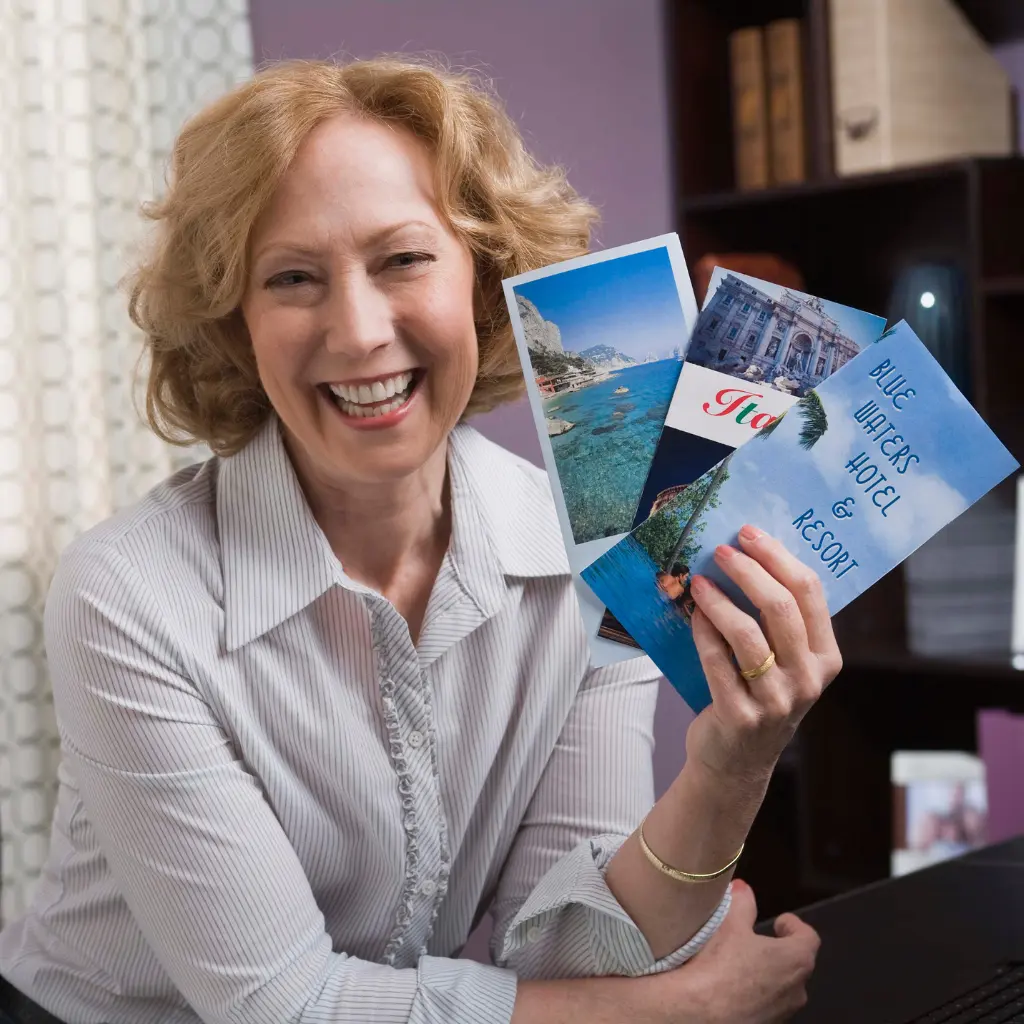
Trade shows, reception areas, and sales meetings are natural homes for brochures. Estate agents showcase properties with floor plans and location details across multiple pages. Hotels present facilities, room categories, and dining options in formats guests can browse. Gyms outline membership tiers, class schedules, and equipment details. The format gives you space to answer questions and build credibility through depth. Leveraging modern digital printing capabilities ensures every page maintains consistent colour accuracy and professional finish.
Full colour printing on quality stock with professional photography creates a piece that represents your brand standards. At Magenta Signs, we’ve produced brochures for clients where the printed piece serves as something prospects keep on their desk or in their bag for future reference. Learning more about how brochures work effectively helps you maximize the impact of this versatile marketing format.
What Makes a Leaflet
Leaflets are A4 or A5 sheets, either printed flat on both sides or folded to create panels. The content focuses on a specific message or offer. Where a brochure explains your entire service range, a leaflet highlights key points or focuses on one event or promotion.
Restaurants use leaflets for takeaway menus. Local tradespeople introduce their services through door drops. Community groups promote specific events. Dentists announce new patient offers. The format prompts quick action rather than extended reading. When you need to reach thousands of households with a focused message, leaflet printing services provide practical solutions at accessible price points.
Folding creates structure within this format. A DL leaflet fits standard letterboxes easily. An A4 sheet folded to A5 creates four panels, allowing you to present information in sequence by opening with attention grabbing headlines, revealing benefits inside, and concluding with clear calls to action.
When you need to reach thousands of households with a focused message, leaflets provide practical solutions at accessible price points.
Side by Side Quick Comparison
| Feature | Brochure | Leaflet |
| Structure | Multiple pages or 6+ panels | Single sheet, 2 to 6 panels |
| Content | Comprehensive, detailed | Concise, focused |
| Size | A4, A5 (folded) | A4, A5, DL |
| Paper | 150 to 250 gsm | 115 to 170 gsm |
| Common folds | Tri fold, Z fold, gate fold, saddle stitched | Half fold, tri fold |
| Cost per unit | Higher | Lower |
| Best use | Reference material | Quick messages |
Understanding standard print dimensions and sizing helps you choose formats that align with industry standards and distribution requirements.
Brochure vs Flyer: Key Distinctions
Whilst both brochures and flyers serve marketing purposes, they work in fundamentally different ways. Flyers are flat sheets with no folds, designed for instant impact. Brochures are folded or bound publications designed for considered reading.
Flyers suit time sensitive announcements where your entire message fits on one or two sides. A nightclub promoting this Saturday’s event, a retailer announcing a flash sale, or a political candidate sharing their platform, all need flyers. The flat format allows bold graphics and large text that communicate at a glance. Exploring different types of flyers helps you choose the right approach for your specific promotional needs.
Brochures suit situations where people need detail to make decisions. A solicitor explaining different legal services, a financial adviser outlining investment options, or a wedding venue showcasing packages, all need the depth brochures provide. The folded or bound format creates a sense of substance and professionalism that delivers different advantages.
The choice comes down to complexity. If your message fits comfortably on two sides with room for impactful design, choose flyers. If you need multiple sections to explain what you offer, choose brochures.
Booklet vs Brochure: Choosing Between Them
Booklets and brochures overlap in purpose but differ in scale and presentation. Both present detailed information, but booklets handle greater volume with proper binding and organisation.
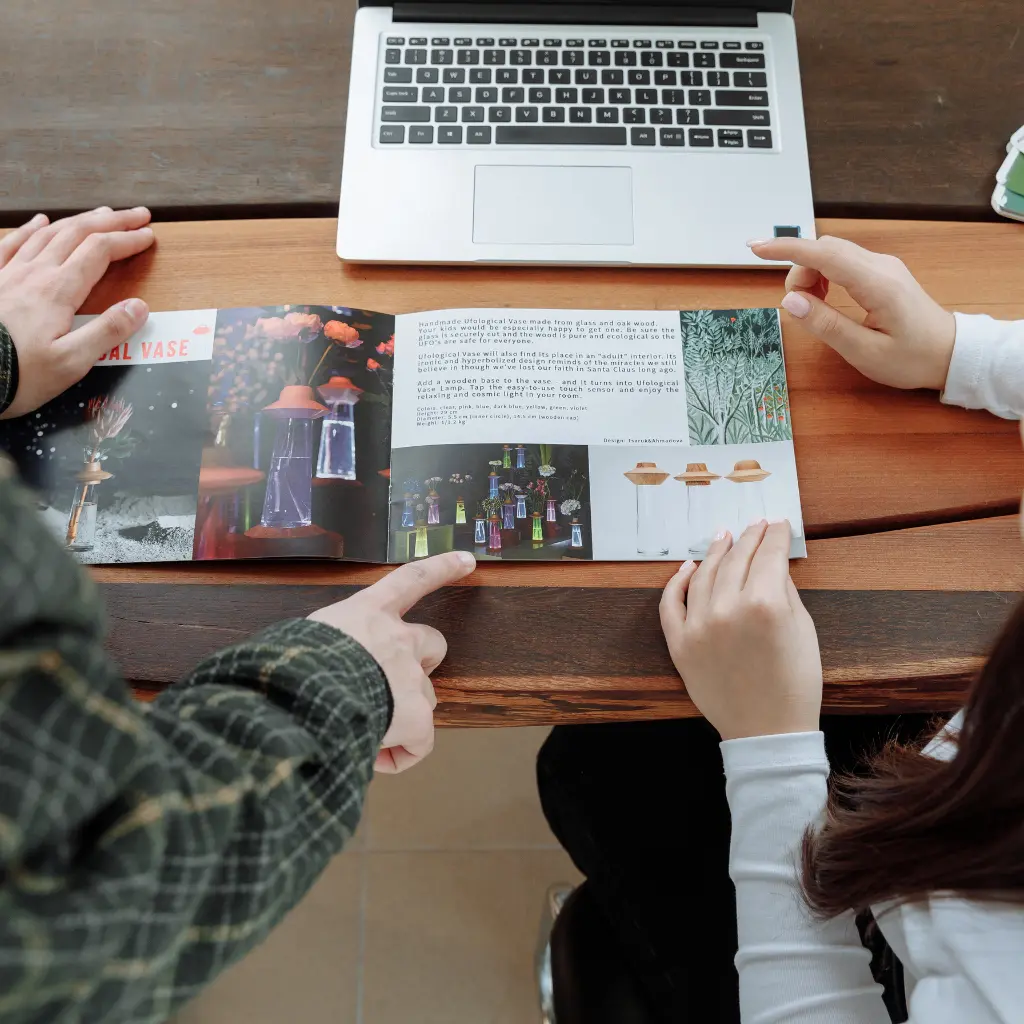
A brochure typically contains 4 to 16 pages and works through folding or simple saddle stitching. An estate agent might use an 8 page brochure to showcase a development. A restaurant could present its story, menu highlights, and booking information in 12 pages. The format stays portable and quick to produce. Like choosing what information to include on business cards, selecting the right brochure format ensures you communicate professionally while staying memorable.
A booklet starts at around 16 pages upward. Product catalogues with dozens of items need booklets. Training providers outlining multiple courses with detailed syllabuses need booklets. Annual reports, event programmes with complex schedules, and comprehensive guides all suit booklet format.
The spine makes the difference physically. Booklets have proper spines allowing content pages and chapter organisation. Brochures fold or staple simply. Booklets feel like publications. Brochures feel like enhanced formats that remain highly portable.
Choose brochures when you need more than a leaflet but content fits comfortably in 4 to 16 pages. Choose booklets when your content requires systematic organisation across many pages.
Understanding Pamphlets
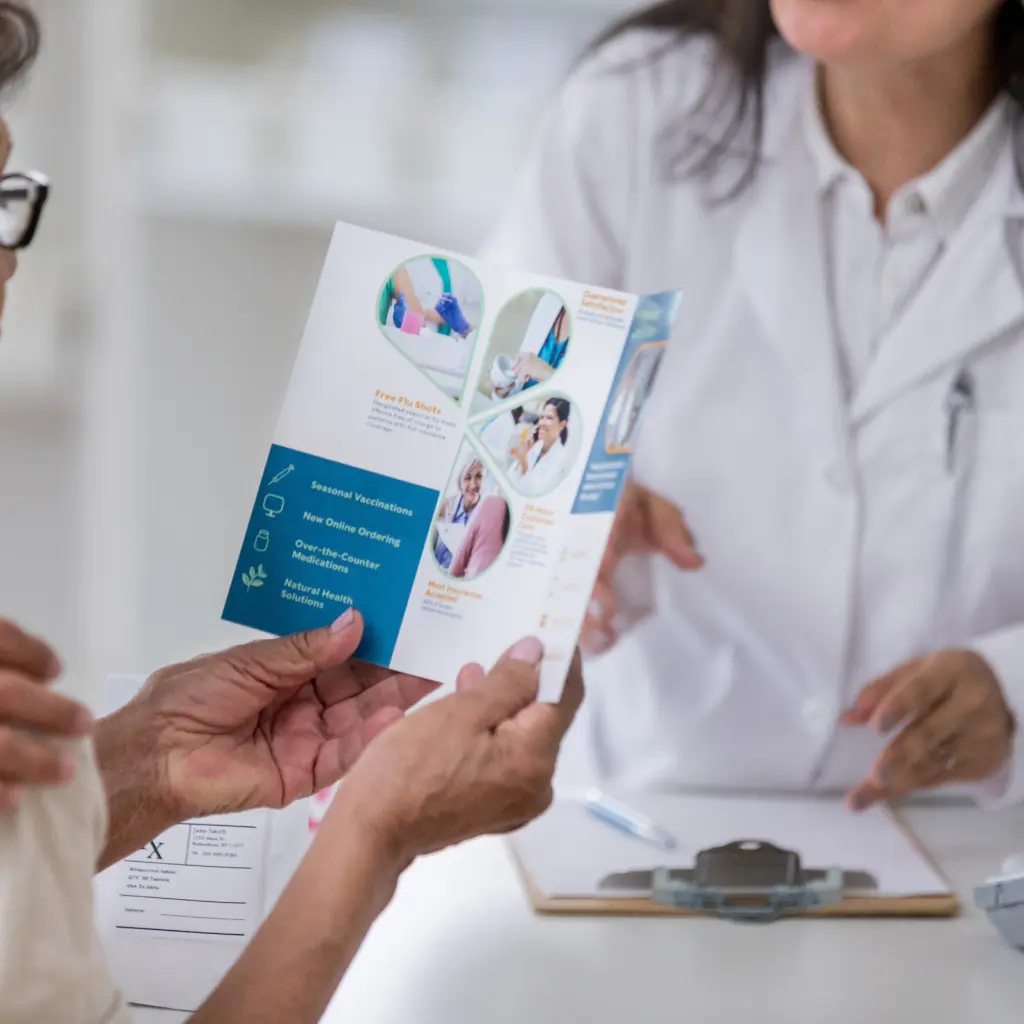
Pamphlets sit between leaflets and booklets as multi page publications (typically 8 to 32 pages) focused on single topics. Medical practices create pamphlets about specific conditions. Charities produce pamphlets about causes. Educational institutions develop pamphlets on support services.
The content leans educational rather than promotional. Whilst brochures promote services, pamphlets inform or advocate through reasoned content.
Complete Format Overview
| Format | Pages | Binding | Purpose | Common Uses |
| Flyer | 1 sheet (flat) | None | Instant announcement | Events, sales, promotions |
| Leaflet | 1 sheet | Folded | Quick information | Menus, door drops, local offers |
| Brochure | 4 to 16 pages | Folded or saddle stitched | Comprehensive information | Company profiles, property details, service guides |
| Pamphlet | 8 to 32 pages | Saddle stitched | Educational content | Medical information, campaign literature |
| Booklet | 16 to 64+ pages | Saddle stitched or perfect bound | Detailed catalogues | Course guides, product catalogues, annual reports |
When to Choose Each Format
Choose Flyers When:
- Your event happens within the next few weeks
- Your message fits on one or two sides
- You need thousands printed quickly
- Cost efficiency and high volume matter
- Distribution will be hand to hand or mass placement
Choose Leaflets When:
- You need more detail than a flyer allows
- Door to door distribution is planned
- You want to explain an offer with supporting points
- Local targeting within specific postcodes
Choose Brochures When:
- People need comprehensive information to make decisions
- You want materials prospects keep and refer back to
- Your credibility benefits from substantial presentation
- Trade shows, sales meetings, or reception displays
- Multiple services or products need explaining
Choose Booklets When:
- Content exceeds 16 pages comfortably
- Systematic organisation with contents pages needed
- Product catalogues with numerous items
- Course information, training manuals, or guides
- Annual reports or event programmes
Choose Pamphlets When:
- Educational content on focused topics
- Healthcare information or campaign literature
- Advocacy or awareness raising
- Informative content rather than promotional
The decision factors include: message complexity, audience needs, distribution method, budget, timeline, and how long materials should remain relevant. For outdoor promotions and events, durable outdoor printing materials offer complementary solutions to paper-based marketing collateral.
Getting Your Materials Printed Professionally
Understanding these format differences ensures you brief projects accurately and receive materials that match your needs. Each format serves distinct purposes, and selecting appropriately delivers better engagement and return on investment.
Professional print combines format expertise with quality materials and design knowledge. The technical aspects enhance your message and strengthen its impact. Working with experienced digital printing solutions providers like Magenta Signs, ensures your materials meet professional standards and deliver results.
For businesses across the UK requiring printed marketing materials, experienced print partners streamline the process from concept through delivery. We help match your content and objectives to the format that works hardest for your specific situation. Speak with our team to discuss which format suits your project and receive practical guidance on creating materials that deliver results.
Frequently Asked Questions
What is the main difference between a brochure and a leaflet?
Brochures have multiple pages or panels presenting detailed information about products, services, or organisations. Leaflets are folded sheets containing focused information for quick reading. Brochures work as reference materials people keep; leaflets deliver actionable messages for specific offers or events.
What is the difference between a brochure and a flyer?
Brochures are multi page folded or bound documents providing comprehensive information across sections. Flyers are flat sheets with no folds, designed for instant visual impact and quick message delivery. Brochures suit detailed explanations; flyers suit urgent announcements.
Is a leaflet the same as a flyer?
Flyers are flat sheets with no folds, designed for instant impact. Leaflets are folded at least once, creating panels that organise information into sections. The folding gives leaflets more content capacity whilst remaining affordable for volume distribution.
What is the difference between a pamphlet and a leaflet?
Pamphlets are multi page booklets (8 to 32 pages) with spines, covering topics in educational depth. Leaflets are folded sheets with brief, practical information. Pamphlets function as small publications for informing; leaflets are promotional communications.
When should I use a booklet instead of a brochure?
Booklets suit content requiring substantial page counts, such as product catalogues with numerous items, course guides with detailed descriptions, or event programmes with complex schedules. Brochures work well for company profiles or service ranges fitting in 4 to 16 pages. Choose booklets when content exceeds what standard brochure formats handle comfortably.
Brochure or leaflet – which should I choose?
The choice depends on how much information your audience needs to take action. Brochures work when prospects need comprehensive details to make purchasing decisions. Leaflets work when you have a focused message about a specific offer, event, or service that prompts a quick response. Your message complexity and distribution method guide the decision.
What affects the cost of producing print materials?
Quantity has the biggest impact, as unit costs decrease significantly at higher volumes. Paper quality, size, colour coverage, and finishing treatments also influence pricing. As a general guide, flyers and leaflets in quantities of 5,000 or more might cost 8 to 15p per piece, whilst brochures in smaller runs could be £1.50 to £3.50 each. These are estimated figures, and actual costs vary based on specifications.