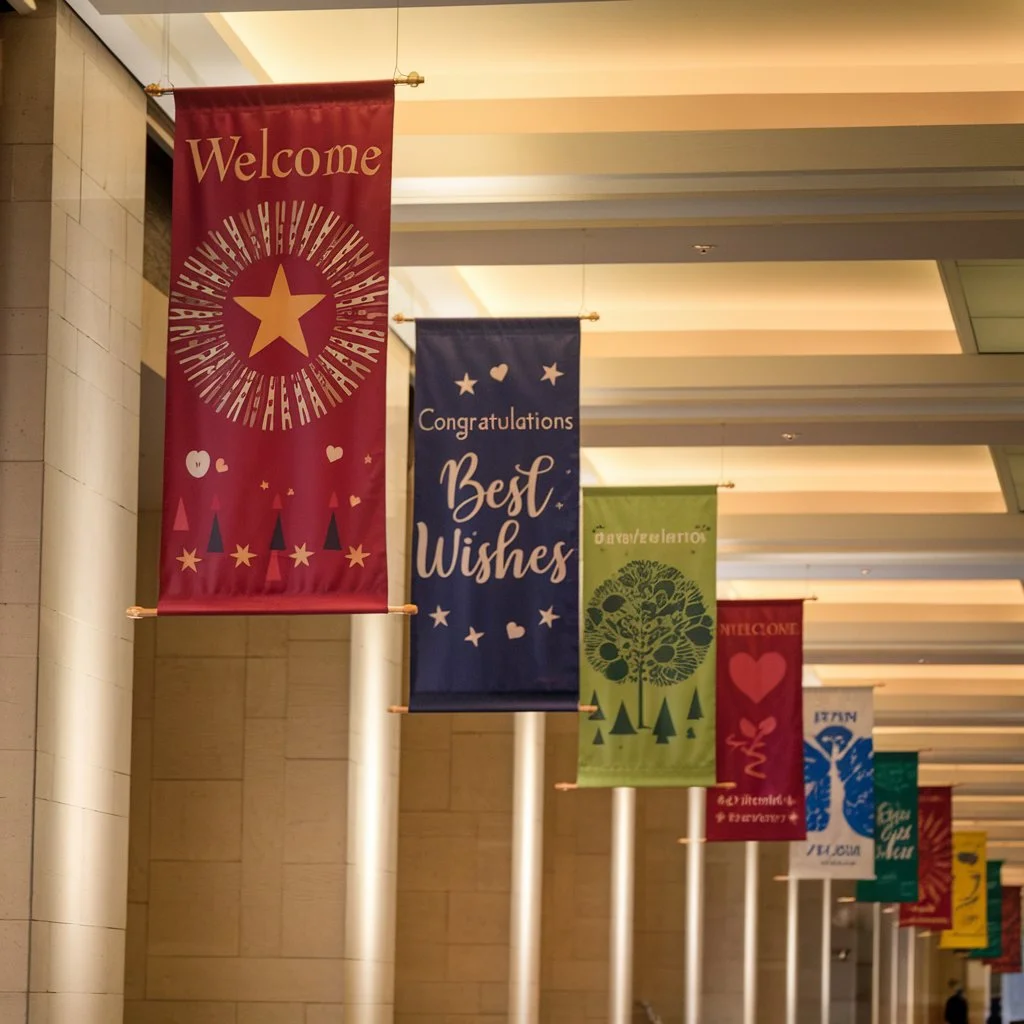
Banners remain one of the most versatile tools in modern advertising, precisely because they’ve evolved far beyond simple vinyl rectangles. Different banner materials and formats serve specific environments, event types, and marketing objectives. Understanding these distinctions means you can match the right format to your actual needs rather than settling for whatever’s cheapest or most familiar.
This guide breaks down the main banner categories you’ll encounter, explains what makes each one suited to particular applications, and helps you make informed choices based on durability, presentation quality, and practical setup requirements.
Key Takeaways
- Vinyl banners offer exceptional durability and weather resistance, making them reliable for long-term outdoor campaigns
- Fabric banners provide a premium aesthetic for indoor environments and retail settings where presentation quality matters
- PVC banners deliver robust performance at accessible price points for temporary outdoor promotions
- Roller banners combine portability with professional presentation, ideal for exhibitions and recurring events
- Mesh banners are specifically engineered for wind-prone locations, reducing structural stress and damage risk
Understanding Banner Categories
Banners generally fall into material-based categories (what they’re made from) and format-based categories (how they’re displayed). The material determines durability, finish quality, and environmental suitability. The format determines portability, setup requirements, and spatial flexibility.
Most businesses need at least two different banner types because indoor events, outdoor promotions, and point-of-sale environments each demand different characteristics. A banner that works brilliantly at a trade show might look out of place in a retail environment.
Main Types of Banners for Advertising
Vinyl Banners
Vinyl banners are constructed from PVC material that’s been reinforced and treated to withstand UV exposure, rain, and temperature fluctuations. The material flexes without tearing and resists fading even after months of direct sunlight.
The surface accepts high-quality printing remarkably well, keeping graphics vibrant rather than washing out over time. You’ll typically see vinyl banners used for building wraps, event signage, roadside advertising, and construction site hoardings. They’re hemmed and fitted with eyelets or pole pockets depending on your mounting method.
The main limitation is weight. Large vinyl banners require secure mounting points and aren’t particularly portable. They’re designed for semi-permanent installation rather than frequent setup and takedown.
Fabric Banners
Fabric banners use polyester or similar textile materials, creating a completely different visual effect. The surface has a subtle texture that diffuses light rather than reflecting it, eliminating the glare you sometimes get with vinyl. This makes them significantly easier to photograph and particularly well-suited to environments where you want an upscale, sophisticated appearance.
The fabric accepts dye-sublimation printing, which embeds the ink into the fibres rather than sitting on the surface. This produces exceptionally smooth colour gradients and photographic reproduction. They’re naturally wrinkle-resistant when properly tensioned.
Fabric banners work brilliantly for retail displays, corporate reception areas, conference backdrops, and indoor events where presentation quality directly reflects on your brand. The trade-off is weather sensitivity: fabric banners aren’t built for prolonged outdoor exposure and will deteriorate if left in wet conditions. For those interested in creating custom fabric displays, understanding the production process helps ensure optimal results.
PVC Banners
PVC banners occupy a middle ground between economy and durability. They’re constructed from polyvinyl chloride in various thicknesses, with heavier-weight options offering better longevity. The material is inherently waterproof and handles moderate weather exposure reasonably well.
These banners are commonly used for short to medium-term outdoor campaigns, such as seasonal promotions, event announcements, or temporary shopfront signage. They’re available in large format sizes, which makes them practical for building facades where visibility from a distance matters.
The printing quality on PVC is good but not exceptional. You’ll get bold, readable graphics that serve their purpose, but the finish lacks the refinement of fabric. PVC banners represent solid value when you need outdoor capability without committing to the cost of high-grade vinyl. Understanding PVC banner material specifications helps you select appropriate thickness and finishing for specific applications.
Roller Banners (Retractable Banners)
Roller banners are self-contained display units where the printed graphic retracts into a base cassette. You can transport the entire unit in a compact carry case and set it up in under a minute without tools or expertise.
The mechanism is spring-loaded, allowing the graphic to pull up and lock into position via a telescopic pole. When you’re finished, you simply release the pole and the banner retracts automatically. This protects the printed surface during transport and storage.
The standard width is 800mm or 850mm, with heights typically ranging from 2000mm to 2200mm. Premium models include adjustable feet for uneven floors and weighted bases for stability. The main constraint is format rigidity: you’re working within a fixed rectangular frame.
Mesh Banners
Mesh banners are perforated materials designed specifically to manage wind load. The mesh structure allows air to pass through rather than creating a solid surface that catches wind like a sail. This dramatically reduces the stress on mounting points and prevents tearing you’d see with solid materials in windy locations.
The mesh typically has a 60-70% solid surface area, with the remaining 30-40% consisting of small perforations. This still provides excellent print visibility whilst allowing airflow. You’ll find mesh banners used on building scaffolding, fence wraps, outdoor sports venues, and any location with consistent or strong winds.
The material itself is usually reinforced PVC or vinyl. Mesh banners cost slightly more than equivalent solid vinyl, but that premium is justified when wind damage would otherwise require frequent replacements.

Feather and Teardrop Banners
Feather and teardrop banners are vertical flags mounted on flexible fibreglass poles. The pole slots into a ground spike or weighted base, and the banner’s shape allows it to rotate with the wind rather than fighting against it.
The names describe the banner shape: feather banners have a curved edge that tapers to a point, whilst teardrop banners have a rounded top that narrows downward. Both formats create tall, eye-catching displays that work brilliantly for outdoor events, retail forecourts, exhibitions, and wayfinding.
The fabric is lightweight polyester printed using dye-sublimation. The pole system is designed to flex and bend rather than snap. These banners combine high visibility with portability. You can transport multiple units easily and set them up wherever you need attention-grabbing vertical presence.
Step and Repeat Banners
Step and repeat banners feature a repeating pattern of logos or branding elements across the entire surface. They originated in press photography, where the repeated backdrop ensures branding appears regardless of where subjects stand or how photographers crop their shots.
These banners are typically fabric-based and mounted on adjustable frame systems. The frame provides tension to keep the surface smooth and wrinkle-free, which is essential when the banner will be photographed.
Beyond press events, step and repeat banners are used at product launches, awards ceremonies, corporate functions, and anywhere you want consistent brand presence in photographs. The professional presentation quality justifies the cost for events where image documentation is important.
Banner Material Comparison
| Banner Type | Best Environment | Typical Lifespan | Weather Resistance | Portability | Print Quality |
| Vinyl | Outdoor | 1-3 years | Excellent | Low | Very Good |
| Fabric | Indoor | 2-5 years | Poor | High | Excellent |
| PVC | Outdoor (short-term) | 6-12 months | Good | Medium | Good |
| Roller | Indoor/Protected | 3-5 years | Poor | Excellent | Very Good |
| Mesh | Outdoor (windy) | 1-2 years | Excellent | Low | Good |
| Feather/Teardrop | Outdoor events | 1-2 years | Good | Excellent | Very Good |
| Step and Repeat | Indoor events | 3-5 years | Poor | Medium | Excellent |
Choosing Banners by Use Case
Outdoor Advertising Requirements
Outdoor banners need to handle UV exposure, rain, temperature fluctuations, and wind. This immediately narrows your options to vinyl, PVC, and mesh materials.
Mounting method matters significantly. Eyelets with bungee cords allow some movement and reduce stress. Pole pockets create cleaner edges but require proper support structures. A well-made banner that tears free in wind is still a failed installation.
Indoor Display Solutions
Indoor environments let you prioritise presentation quality over weather resistance. Consider your hanging method early. Retail spaces often use ceiling-mounted hardware that requires lightweight materials. Corporate environments might have dedicated display systems. Exhibition halls typically provide rigging points, but you’ll need to supply your own hanging hardware.
Lighting conditions affect banner appearance significantly. Fabric banners respond well to directional lighting, whilst vinyl surfaces can create hot spots and glare under certain lighting angles.
Event and Exhibition Banners
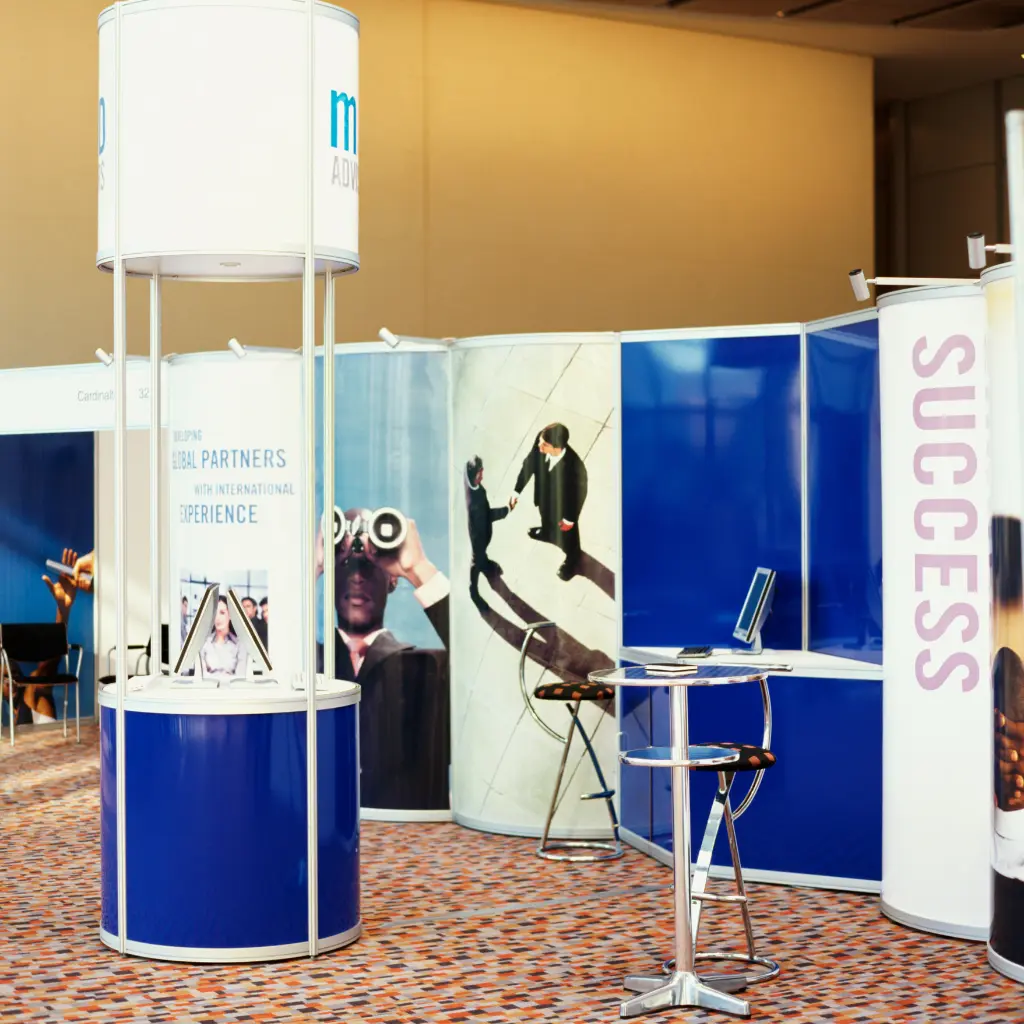
Events demand banners that travel well and set up quickly. Think about setup logistics, as events often have tight setup windows, and complicated banner systems create unnecessary stress. Choose formats that your team can deploy confidently without specialised tools or expertise. Combining banners with complementary exhibition display systems creates cohesive, professional event presentations.
Retail Point-of-Sale Applications
Retail banners need to attract attention without overwhelming the space. Size matters in retail environments. Oversized banners can dominate smaller spaces and create visual clutter. Measure your available space carefully and consider how banners will interact with existing displays, lighting, and customer flow patterns.
Making Your Selection Decision
Start with environment and usage frequency. A banner used daily in harsh conditions has different requirements than one deployed occasionally in controlled spaces. Choosing between vinyl and fabric materials often depends on whether you prioritize weather resistance or presentation quality.
Budget matters, but factor in replacement costs. A cheaper banner that needs replacing twice costs more than a durable option that lasts three times longer. Consider the cost per month of useful life rather than just upfront price.
Quality of printing and finishing directly affects how your brand is perceived. Work with suppliers who understand both printing quality and material selection.
Frequently Asked Questions
Can I print photographs on vinyl banners?
Yes, modern digital printing on vinyl handles photographic images well, though you’ll get sharper results on fabric using dye-sublimation. The evolution of banner printing technology has dramatically improved image reproduction across all materials. Ensure your image resolution is at least 150 DPI at final size to avoid pixelation.
Do roller banners need replacing or just the graphic?
The base mechanism typically lasts years with proper handling. You can order replacement graphics and swap them yourself, which costs roughly a third of buying a complete new unit.
How do I store vinyl banners between uses?
Roll them loosely with the printed side facing outward to prevent cracking. Store horizontally in a dry location away from extreme temperatures. Never fold vinyl banners as this creates permanent creases.
Are there eco-friendly banner options?
Recyclable PET fabric and biodegradable mesh options exist, though they cost more and offer shorter lifespans. Some suppliers offer take-back programmes for recycling old PVC banners.
Can mesh banners be printed double-sided?
Yes, but the perforations reduce opacity, so you’ll see some show-through from the opposite side. For best results, use mesh for single-sided applications.
What’s the heaviest wind speed mesh banners can handle?
Properly installed mesh banners typically handle winds up to 100-110 km/h, though this depends on banner size and mounting quality.
Choose Your Banner Solution
Selecting the right banner type transforms it from generic signage into an effective marketing tool that serves its intended purpose reliably. Match the material and format to your actual environment, and you’ll get considerably better performance and longevity from your investment.
If you need guidance on specific banner applications or want to discuss custom requirements, contact our team for expert advice tailored to your marketing objectives.