

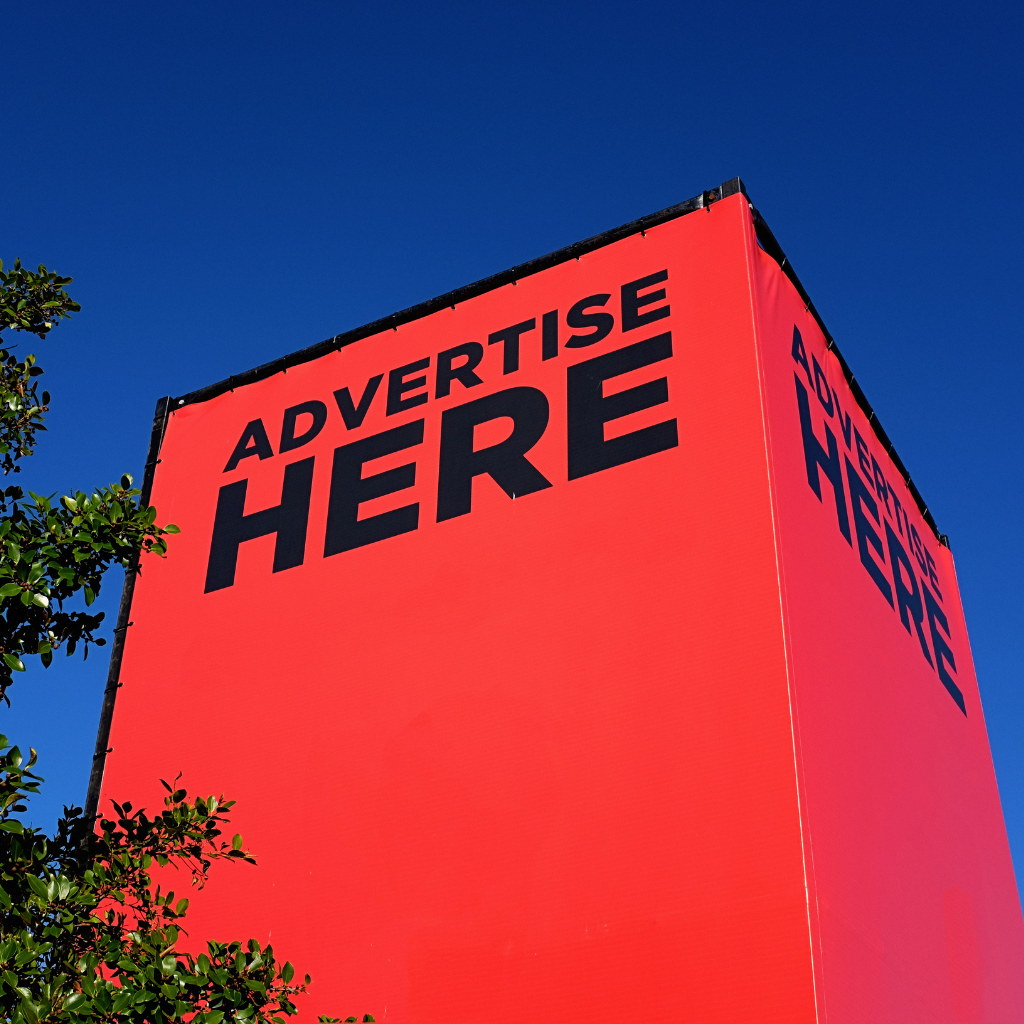
Billboards are one of the most recognisable forms of advertising, helping businesses reach large audiences in busy public spaces. From traditional roadside posters to modern digital displays, they remain a popular way to build brand awareness and promote products, services and events. This guide explains what billboard advertising is, the main types available, where it works best, its key benefits, and how to design a billboard that captures attention.
What Is Billboard Advertising?
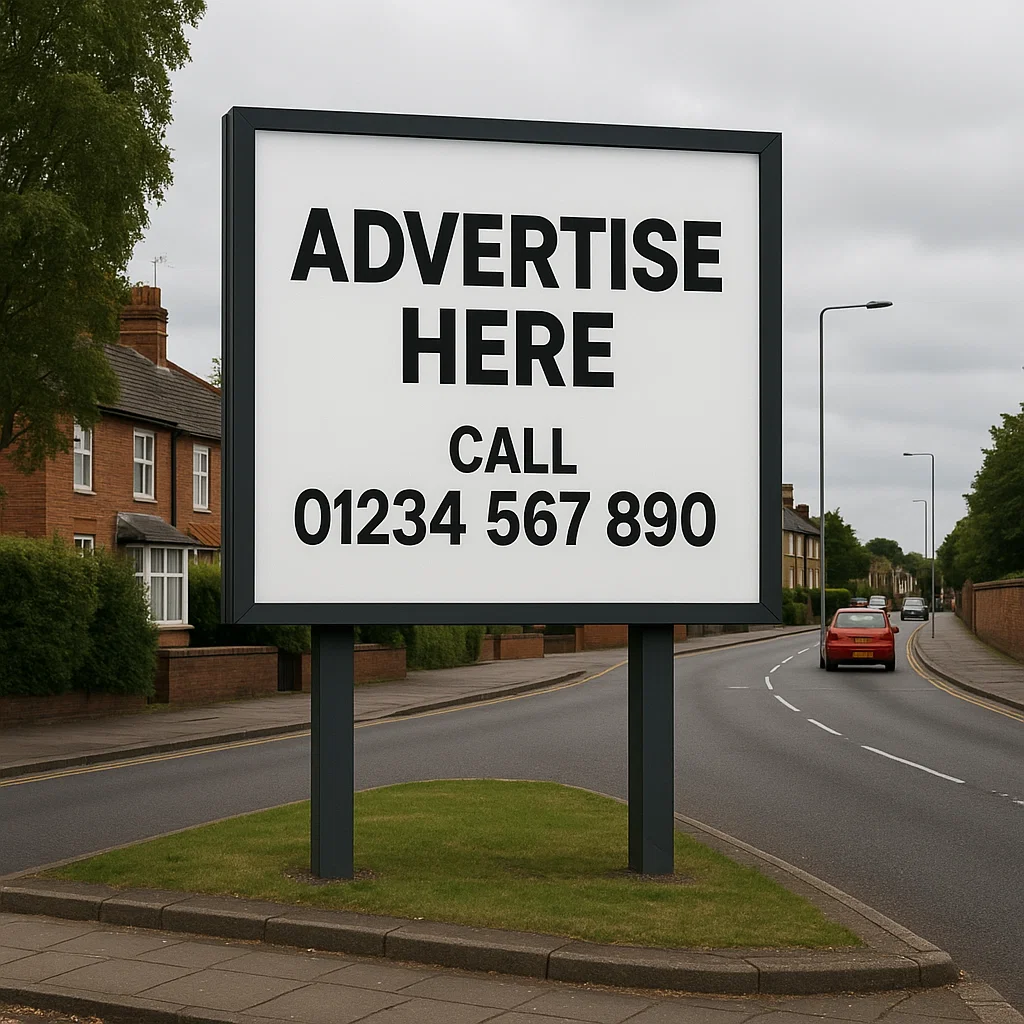
Billboard advertising is a form of outdoor advertising, the broad category of advertising seen while people are travelling, shopping or spending time outdoors. Billboards are one of the largest and most recognisable formats within outdoor advertising. They are positioned on busy roads, in town and city centres, and other high-footfall locations to deliver a simple message that people can understand in just a few seconds.
Although billboards are often confused with site hoardings, they serve different purposes, so it’s worth understanding the difference between a hoarding and a billboard. Traditional billboards display printed posters or function as an outdoor display board, while digital billboards use LED screens to show changing adverts that can be updated remotely. Across the UK, digital billboards now sit alongside traditional printed billboards, giving advertisers greater flexibility while maintaining the broad reach of outdoor advertising.
Types of Billboard Advertising
Billboards come in a few main forms, and the right one depends on budget, location and how often the message needs to change.
• Traditional (static) billboards carry a printed advert for the length of the booking. They’re simple, always on, and strong for broad brand awareness on busy routes.
• Digital billboards show rotating, scheduled content, so advertisers can daypart (different messages at different times) and update remotely. They sit in the same family as advertising hoardings.
• Mobile billboards turn vehicles into moving adverts that travel through busy areas, reaching spots fixed boards can’t.
• Innovative formats include three-dimensional builds, scent or interactive boards, construction hoarding that turns site fencing into advertising space, and other print formats such as banners and display graphics.
| Aspect | Traditional billboard | Digital billboard |
| Look | Static printed image | Dynamic, changing display |
| Cost | Lower upfront | Higher upfront, shared across ads |
| Flexibility | Physical reprint to change | Updated remotely in minutes |
| Targeting | Limited | Day-parting and scheduling |
| Waste | Printed materials | Less physical waste |
Why Billboard Advertising Works
Billboards earn their place on brand awareness. A well-placed board is seen by thousands of the same people every day, and that repeated exposure keeps a brand front of mind, so it surfaces when someone needs the product or service. Bold visuals and a short message do the work quickly, which matters when most people only glance for a few seconds. Because billboard ads can’t be skipped, blocked or scrolled past, they reach audiences that digital channels miss, which is why they still anchor a lot of UK campaigns.
Where Billboards Work Best
Placement does most of the heavy lifting, and a few environments deliver consistently:
• Motorways and arterial roads, where large boards catch high volumes of commuter traffic at speed.
• City centres and high streets, reaching pedestrians and slow-moving traffic who have more time to read.
• Transport hubs such as stations and bus interchanges, where people wait and the message has time to land.
• Retail parks and roadside sites near shops, putting a brand close to the point of purchase.
• Event and seasonal sites near venues or busy routes, timed to festivals, fixtures and local occasions.
The right fit comes down to who you want to reach and when they’re out and about, so the same brand might use a fast motorway board for reach and a city-centre site for dwell time.
How to Design an Effective Billboard
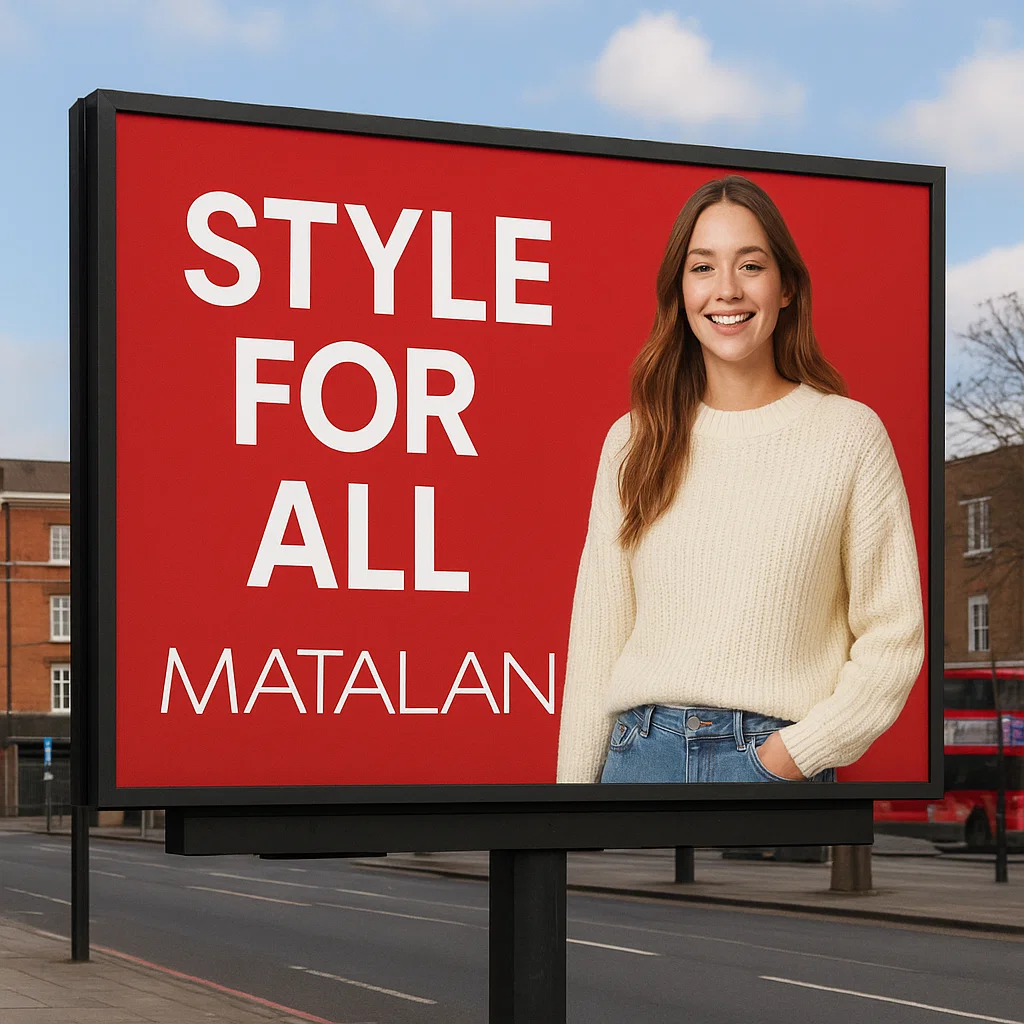
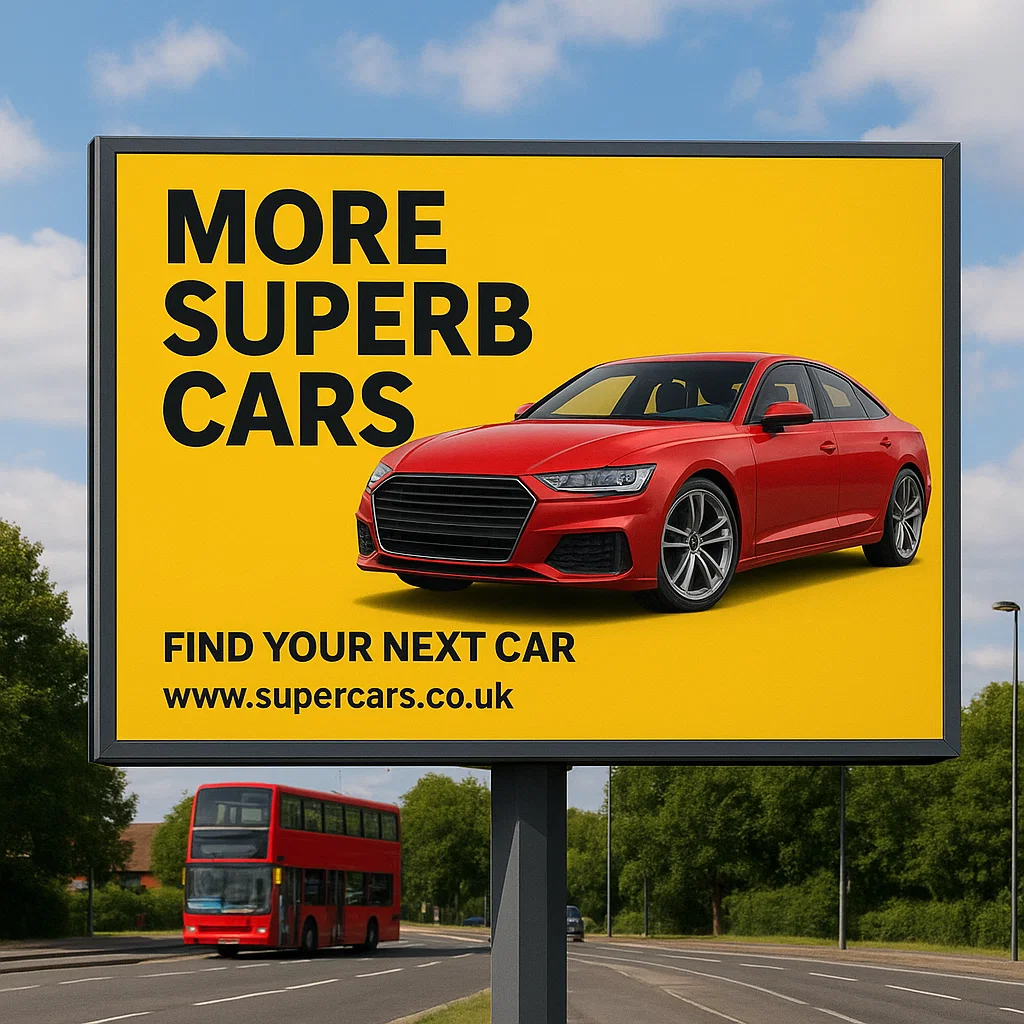
Good billboard design follows a few rules, because you’re communicating in about six seconds.
1. Keep the message to six words or fewer.
2. Use bold, legible typography that reads from a distance, and skip decorative fonts.
3. Lead with one strong image rather than lots of text.
4. Use high contrast and bright colour so it stands out against the sky and street.
5. Show your logo and brand colours, but don’t let them swamp the message.
6. Add one clear call to action, like a short web address.
7. Match the design to the site: motorway boards need bigger type than a city-centre board people pass slowly.
Common Mistakes to Avoid
The frequent missteps are less about looks and more about planning. Putting a board where your audience rarely goes wastes the spend, so location targeting matters more than anything else. Ignoring local rules is another: outdoor adverts have to meet planning and safety requirements, including signage and fire-safety regulations, and getting it wrong can mean fines or removal. Two more catch people out: not tracking results at all, so there’s nothing to learn from, and sticking only to traditional boards when a digital slot might suit the campaign better.
Building a Billboard Campaign
A campaign works back from a clear goal, whether that’s awareness, a product launch or driving traffic to a website. Know who you’re targeting and where they actually travel, then choose locations to match. Make the billboard part of your wider marketing so the message lines up with your social, print and online ads, because consistency across channels is what makes people act. Measuring takes a little effort: watch for lifts in web traffic, branded searches or enquiries after a board goes live, and use QR codes or geofencing to tie responses back to a location. An experienced signage and advertising team can help with placement, design and budgeting and steer you around the common mistakes.
Frequently Asked Questions
What type of advertising is a billboard?
It’s outdoor (OOH) advertising, the category that covers ads placed where people are out and about. Billboards are the largest and most visible OOH format.
How much does billboard advertising cost?
It varies with location, board size, how long it’s booked for and whether it’s traditional or digital. Premium, high-traffic sites cost more, and digital slots usually carry a higher upfront cost than a single printed poster.
Is billboard advertising still effective?
Yes. For brand awareness, it remains one of the most reliable formats because a well-placed board reaches the same audience repeatedly and can’t be skipped.
Billboard Advertising in Brighton
Most of this applies anywhere, but Brighton shows why location and timing matter. It’s a busy seaside city with heavy year-round footfall along the seafront, the Lanes and North Laine, London Road and Western Road, plus a packed events calendar from the Brighton Festival to Pride that pulls in big crowds. For local businesses, outdoor advertising near those routes, or around the A23 and A27 approaches, puts a brand in front of residents, commuters and visitors at once, and event-timed campaigns work especially well while the city is at its busiest. We work with businesses across Brighton on signs and outdoor advertising, from hoardings to event banners.
In Short
Billboard advertising is still one of the simplest ways to reach a lot of people at once: pick the right format and location, keep the design bold and simple, tie it into your wider marketing, and track the response. If you’re planning outdoor advertising in Brighton or anywhere in the UK, get a free quote from Magenta Signs Ltd.