

Introduction
Marketing budgets across the UK have shifted heavily towards digital channels in recent years. Yet, anyone walking through a busy high street or retail park can see that physical signage remains firmly in place. There is a good reason for that. Understanding why outdoor signage still matters in the digital marketing era helps business owners make smarter decisions about where their money actually works hardest. Online ads vanish the moment a budget runs out, but a well-made sign continues earning its keep through every season. This guide explores the practical role exterior signage plays today and why it sits comfortably alongside online activity rather than behind it.
Physical Visibility in a Digital Landscape
Screens demand attention, but they also fight for it constantly. A customer scrolling through their phone may pass dozens of brands in a single minute and remember none of them. Exterior signage works in a different way. It occupies real space in the world a customer is already moving through, whether that is a town centre, an industrial estate or a commercial road.
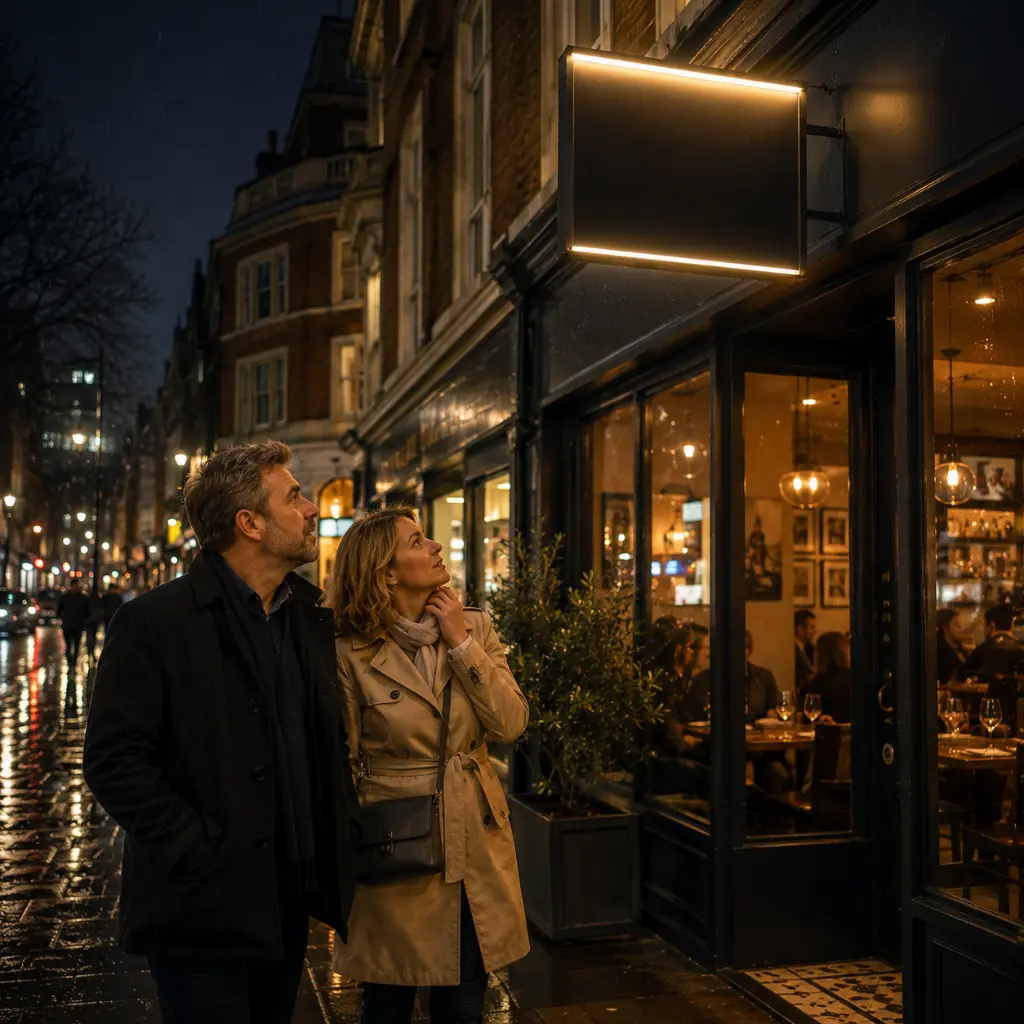
A clear fascia or a well-lit projecting sign cuts through the surrounding noise simply by being there. It does not need a click, a feed or an algorithm to reach someone, and it reaches hundreds of pedestrians and drivers each day without competing for screen time. Of course, that presence only works when the sign is sized correctly for its viewing distance and the environment it sits in.
Supporting Local Discovery and Foot Traffic
Most independent businesses rely heavily on local customers, and those customers still rely heavily on what they see in front of them. A confident shop front sign confirms that a business is open, established and worth stepping into. Without it, even people who looked the business up online beforehand can walk straight past the door.
Where outdoor signage genuinely earns its place
- High street shops need to attract passing footfall
- Units within retail parks are competing for visitor attention
- Premises on industrial estates where wayfinding is essential
- Office buildings that need clear identification from the road
If your premises are difficult to spot from the pavement or car park, a conversation with Magenta Signs Ltd can help you rethink visibility before it costs you another season of missed visitors.
Building Trust Through a Physical Presence
A digital advert can be set up in minutes, which is part of the reason it carries less weight than it once did. Permanent signage suggests something different. It signals that a business has invested in its premises, intends to stay, and takes pride in how it presents itself. That impression matters more than many owners realise.
Customers approaching an unfamiliar business often make a quick judgment based on the building itself. Tired or missing signage raises doubt, while clean, professional exterior branding reassures. Many of these trust issues stem from signage problems businesses fail to notice until customers already have. This trust effect is something online advertising alone struggles to replicate.
Reinforcing Brand Identity Offline
Strong branding works across every touchpoint, not just on screens. The colours, typography and tone customers see online should carry through to your fascia, vehicle livery and any banners or window graphics on the building. When physical and digital identities align, recognition builds far more quickly.
This is where outdoor signage and digital marketing genuinely support one another. A customer who has seen your social posts and then spots the same identity on a real building feels they already know the business. That sense of familiarity is difficult to manufacture through advertising on its own.
Wayfinding and Customer Experience
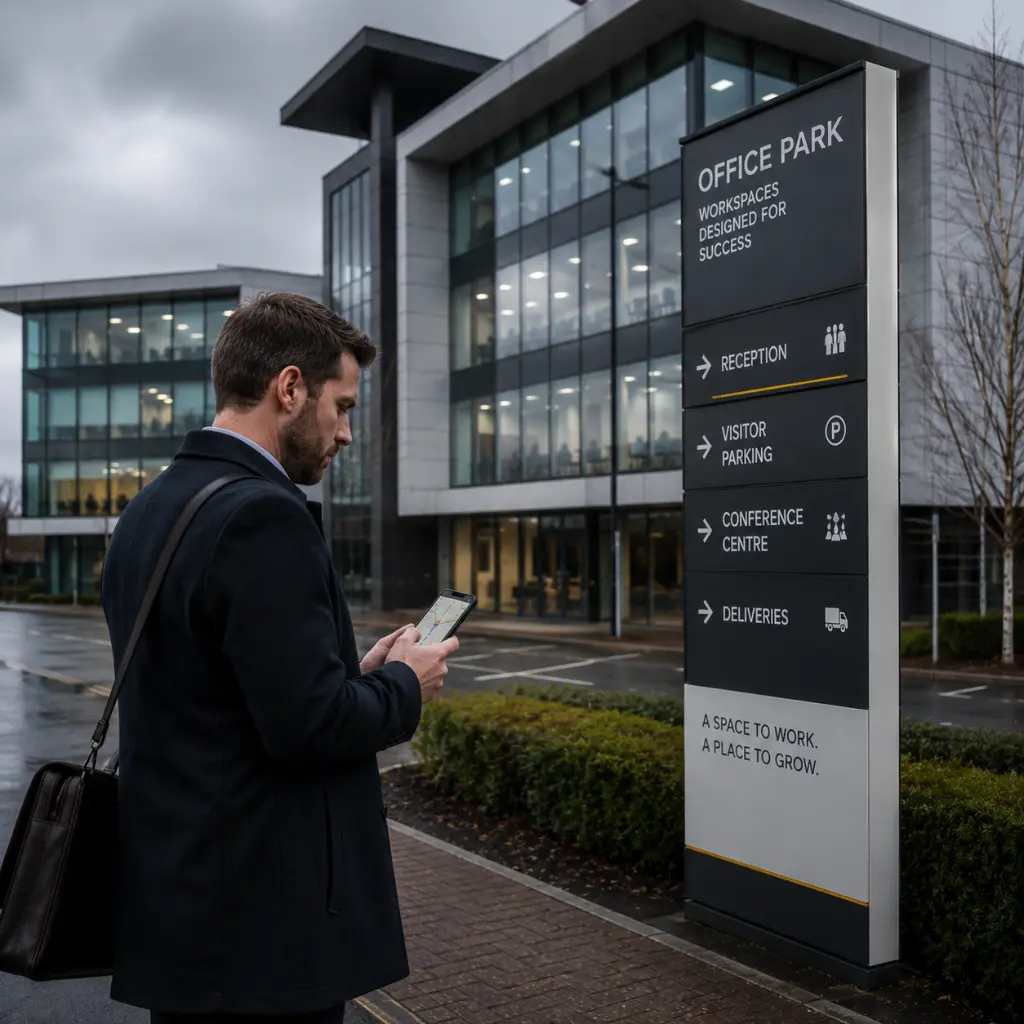
Signage does more than advertise. It guides people through a space, reduces frustration and shapes how a visit feels from the moment someone arrives. Larger commercial sites such as office buildings, retail parks and industrial estates depend on clear wayfinding to function properly.
Practical wayfinding considerations
- Entrance and reception identification for first-time visitors
- Directional signs for car parks, deliveries and accessible routes
- Internal navigation that connects naturally with the exterior identity
- Consistent design language across every sign on site
Visitors rarely comment when wayfinding works well, but they certainly notice when it does not.
Cost Efficiency Compared with Digital Advertising
Online campaigns demand ongoing spend. The moment payments stop, the visibility stops with them. Permanent signage operates on a very different model, continuing to work day and night for years with little more than occasional maintenance.
That long-term value is part of what makes commercial signage such a sensible investment for UK businesses. It keeps promoting your premises through quiet trading periods, busier seasons and everything in between, without needing a fresh budget approval each month.
Standing Out in Competitive Locations
In busy commercial settings, the businesses that get noticed are usually the ones that have thought carefully about their exterior presence. A well-designed illuminated sign or a striking fascia can lift a unit above its neighbours without resorting to gimmicks, which matters particularly in retail parks and high street parades where similar shopfronts sit side by side.
Considered design, sensible scale and quality materials all play their part in helping a business stand apart. Magenta Signs Ltd can help you assess how your current signage compares within its setting and where small improvements would make the biggest difference.

Complementing Your Digital Marketing Strategy
Exterior signage is not a rival to online activity. It works alongside it. A customer who searches for your business online and then finds the same identity reflected on the building experiences a smoother, more confident journey. Equally, someone who notices your sign while passing may go on to look you up online later that day.
This is the real strength of well-planned signage in a digital-first marketplace. It quietly closes the loop between what people see on their screens and what they encounter in person, supporting every other marketing channel in the background.
Durability and Longevity in UK Conditions
The UK weather is not kind to signage. Persistent rain, wind exposure and damp winters all test materials over time, which is why specification matters so much. Aluminium composite, stainless steel, weather-grade acrylic and laminated vinyl finishes all perform far better than cheaper alternatives when fitted properly.
Choosing durable materials means the sign continues looking professional through several seasons rather than fading or peeling within a year. It also reduces the frequency of replacement, which protects both your budget and your brand image over time.
Conclusion
The shift towards digital has changed plenty about how businesses reach customers, but presence in the real world still carries weight that no online campaign quite manages on its own. A thoughtful sign keeps working in the background, shaping first impressions and helping people find their way to your door long after a campaign has ended. When you are ready to refresh an existing fascia or plan something new, Magenta Signs Ltd is on hand with honest guidance and dependable workmanship.